

Solar energy for house is a clean and renewable way to produce electricity by using sunlight. A home solar system uses solar panels installed on the roof to capture sunlight and convert it into electricity for daily use. This electricity can power lights, fans, televisions, refrigerators, air conditioners, and many other household appliances.
A typical residential solar system includes solar panels, a solar inverter, a mounting structure, safety equipment, and, in some cases, a solar battery. During the day, the panels generate electricity from sunlight. The inverter then converts it into the type of electricity your home appliances need. If your system produces more electricity than your home uses, the extra power can be sent to the electricity grid through net metering, depending on local regulations.
Home solar energy helps reduce electricity bills, lowers dependence on traditional power sources, and supports a cleaner environment by reducing carbon emissions. With government support programs such as the PM Surya Ghar Muft Bijli Yojana, installing a residential solar system has become more affordable for many homeowners in India. A well-designed solar system can provide reliable savings for more than 25 years with minimal maintenance.
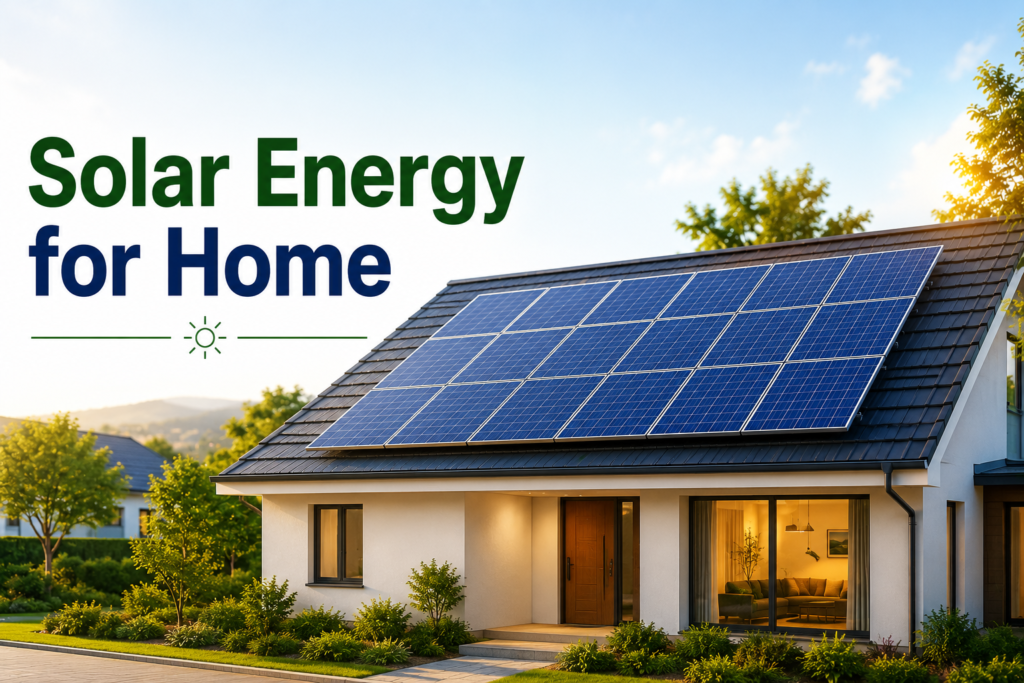
Table of Contents
Solar energy for house is one of the easiest and most effective ways to generate electricity using sunlight. Instead of depending only on electricity supplied by the power grid, homeowners can produce their own power by installing a home solar system on their rooftop. This system captures sunlight and converts it into electricity that can be used to run everyday household appliances.
In India, more families are choosing residential solar systems because electricity prices continue to rise, while solar technology has become more affordable. Government initiatives like the PM Surya Ghar Muft Bijli Yojana also encourage homeowners to install rooftop solar systems by offering financial support to eligible households.
A properly designed solar energy system for home can lower monthly electricity bills, reduce dependence on traditional energy sources, and provide reliable power for more than 25 years with very little maintenance. Whether you live in an independent house, villa, farmhouse, or apartment with rooftop access, solar energy can be a smart long-term investment.
Definition of Solar Energy for Home
Solar energy for house is electricity generated from sunlight using solar panels installed on the roof or another open area that receives direct sunlight. The solar panels contain photovoltaic (PV) cells, which convert sunlight into electricity without producing smoke, noise, or harmful emissions.
The electricity generated by the solar panels is first produced as Direct Current (DC). A solar inverter then converts it into Alternating Current (AC), which is the type of electricity used by household appliances such as lights, ceiling fans, televisions, washing machines, refrigerators, water pumps, and air conditioners.
Depending on the type of system you choose, any extra electricity can either be stored in a solar battery or exported to the electricity grid through net metering. This allows homeowners to make better use of the electricity generated during sunny hours.
Unlike electricity produced from coal or diesel, solar energy is renewable because sunlight is naturally available every day. This makes home solar systems a cleaner and more sustainable solution for meeting household electricity needs.
Why Homeowners Are Choosing Solar Energy
More homeowners are switching to solar energy because it offers both financial and environmental benefits. Instead of paying increasing electricity bills every month, families can generate their own electricity and reduce their dependence on the grid.
Some of the main reasons people choose solar energy for their homes include:
- Lower monthly electricity bills
- Long-term savings on energy costs
- Clean and renewable source of power
- Government subsidy for eligible residential systems
- Low maintenance requirements
- Protection from rising electricity prices
- Increased property value
- Reduced carbon footprint
Modern rooftop solar systems are designed to operate efficiently for decades, making them a practical investment for homeowners who want predictable electricity costs.
How Solar Energy Helps Reduce Electricity Bills
One of the biggest advantages of installing a home solar power system is reducing monthly electricity expenses.
During the day, solar panels generate electricity from sunlight. Your home uses this electricity first before drawing power from the electricity grid. This means you purchase less electricity from your local power distribution company, resulting in lower electricity bills.
If your on-grid solar system generates more electricity than your home consumes during the day, the extra power can be sent to the grid through net metering where available. In return, you receive energy credits that help reduce future electricity bills.
The amount you save depends on several factors, including:
- Size of your solar system
- Daily electricity consumption
- Average sunlight received at your location
- Roof direction and shading
- Local electricity tariff
- Net metering policy
A properly sized solar system can significantly reduce electricity costs and provide consistent savings for many years.
Environmental Benefits of Home Solar Systems
Solar energy is considered one of the cleanest ways to generate electricity because it does not burn fossil fuels. Unlike traditional power plants that release greenhouse gases into the atmosphere, solar panels generate electricity without producing air pollution during operation.
By choosing solar energy for home, you help:
- Reduce carbon emissions
- Lower air pollution
- Reduce dependence on coal-based electricity
- Conserve natural resources
- Support cleaner and greener communities
As more households adopt renewable energy, the overall demand for fossil fuel-based electricity decreases. This contributes to a healthier environment for current and future generations.
Who Should Install Solar Energy at Home?
A home solar system is suitable for many types of homeowners, especially those who use a significant amount of electricity every month.
Solar energy may be a good option if you:
- Own an independent house with a suitable rooftop
- Receive regular sunlight for most of the day
- Want to reduce monthly electricity bills
- Plan to stay in the same home for many years
- Want to use clean and renewable energy
- Are eligible for government subsidy programs
Even homes with moderate electricity usage can benefit from installing a properly sized residential solar system.
How Does Solar Energy Work in a Home?
Many people know that solar panels generate electricity, but they often wonder how solar energy actually works in a home. The process is simple. A home solar system captures sunlight, converts it into electricity, and safely delivers that electricity to your household appliances. If the system produces more electricity than your home needs, the extra power can either be stored in a battery or sent to the electricity grid through net metering, depending on the type of system installed.
Understanding how a solar energy system for home works can help you choose the right solar solution and make better decisions before installation.
Step 1: Solar Panels Capture Sunlight
The first step begins with the solar panels installed on your rooftop or another open area that receives direct sunlight.
Each solar panel is made up of many photovoltaic (PV) cells. These cells absorb sunlight throughout the day and start generating electricity as soon as sunlight reaches them. Unlike traditional electricity generation, solar panels do not create electricity by burning fuel. They simply convert the sun’s energy into electrical energy.
The amount of electricity generated depends on several factors, including:
- The intensity of sunlight
- The size of the solar system
- The direction and angle of the solar panels
- The weather conditions
- Any shadows from nearby trees or buildings
Solar panels continue producing electricity even on cloudy days, although the output may be lower than on bright sunny days.
Step 2: Photovoltaic (PV) Cells Generate Electricity
Inside every solar panel are photovoltaic (PV) cells, which are responsible for producing electricity.
When sunlight hits these cells, tiny particles of light called photons transfer their energy to the semiconductor material inside the cell. This movement of energy causes electrons to flow, creating Direct Current (DC) electricity.
This process happens automatically whenever sunlight is available. Since there are no moving parts, PV cells operate quietly and require very little maintenance over their lifetime.
Modern PV technology is highly reliable and is designed to perform efficiently for more than 25 years.
Step 3: DC Electricity Flows to the Solar Inverter
The electricity produced by solar panels is Direct Current (DC). However, most household appliances cannot use DC electricity directly.
The generated DC electricity is safely carried through specially designed solar cables to the solar inverter, which acts as the control center of the entire solar power system.
During this stage, the inverter continuously monitors the electricity coming from the panels to ensure the system operates safely and efficiently.
Step 4: The Inverter Converts DC into AC Power
The solar inverter converts Direct Current (DC) into Alternating Current (AC).
AC electricity is the standard type of electricity used in homes to operate appliances such as:
- Lights
- Ceiling fans
- Refrigerators
- Air conditioners
- Washing machines
- Televisions
- Water pumps
- Kitchen appliances
- Computers and mobile chargers
Without the inverter, the electricity generated by the solar panels could not be used by most household electrical devices.
Modern inverters also monitor system performance and include built-in safety features that protect your home and the solar system.
Step 5: Electricity Powers Your Home Appliances
Once the electricity has been converted into AC power, it is supplied directly to your home’s electrical distribution system.
Your appliances automatically use the electricity generated by the solar panels first. If the solar system is producing enough electricity, your home will draw very little or no electricity from the utility grid during daylight hours.
For example, during a sunny afternoon, your solar system can power:
- Fans
- LED lights
- Refrigerator
- Television
- Wi-Fi router
- Washing machine
- Air conditioner (depending on system size)
If your home’s electricity demand becomes higher than the solar system’s output, the remaining electricity is automatically supplied by the grid. This entire process happens seamlessly without any manual switching.
Step 6: Excess Electricity Is Sent to the Grid Through Net Metering
Sometimes your solar system generates more electricity than your home is using, especially during the middle of the day.
In an on-grid solar system, this extra electricity is exported to the electricity grid through a net meter.
The net meter records:
- Electricity imported from the grid
- Electricity exported to the grid
Depending on your state’s net metering policy, the exported electricity is adjusted against your future electricity consumption, helping reduce your monthly electricity bill.
Net metering allows homeowners to make better use of the electricity their solar system produces instead of letting the excess energy go to waste.
What Happens During a Power Outage?
This is one of the most common questions homeowners ask before installing solar.
If you have a standard on-grid solar system, it usually stops supplying electricity during a power outage. This is an important safety feature that prevents electricity from flowing back into the grid while utility workers are repairing power lines.
If you want electricity during power cuts, you can choose:
- A hybrid solar system with battery backup
- An off-grid solar system
- A solar system connected to an energy storage battery
These systems can continue supplying electricity to selected appliances even when the grid is unavailable.
The backup duration depends on:
- Battery capacity
- Daily electricity usage
- Number of appliances connected
- Amount of stored energy
How Solar Batteries Store Extra Energy
A solar battery stores excess electricity generated during the day for use later when sunlight is not available.
For example, the battery can supply electricity:
- During the night
- During power outages
- On cloudy days with lower solar production
- During peak electricity demand
Not every home solar system requires a battery. Many homeowners choose an on-grid solar system because it is more affordable and uses net metering instead of battery storage.
However, if your area experiences frequent power cuts or you need uninterrupted electricity for essential appliances, adding a battery can be a practical solution.
Modern lithium-ion solar batteries are compact, efficient, and designed to last for many years with minimal maintenance.
Is Solar Energy Worth It for Your Home?
Many homeowners ask the same question before installing solar panels: “Is solar energy worth it for my home?” In most cases, the answer is yes. If your home receives good sunlight and you have a suitable roof, a home solar system can reduce your electricity bills, increase your home’s value, and provide reliable savings for many years.
However, the value of solar depends on factors such as your monthly electricity usage, roof condition, available sunlight, local electricity tariffs, and the quality of the solar installation. Understanding these factors will help you decide whether investing in solar energy for house is the right choice.
Initial Investment vs Long-Term Savings
Installing a residential solar system requires an upfront investment. The total cost depends on the system size, the quality of the equipment, and the installation requirements.
Although the initial cost may seem high, solar panels continue generating electricity every day for more than 25 years. This means the money you save on electricity bills over time can be much greater than the original installation cost.
Instead of thinking about solar as an expense, think of it as a long-term investment that helps reduce your monthly household expenses.
Average Payback Period for Residential Solar
The payback period is the amount of time it takes for the savings on your electricity bills to recover the money spent on installing the solar system.
For most homes in India, the payback period is usually between 4 and 7 years, depending on:
- Your monthly electricity bill
- The size of your solar system
- The amount of sunlight your roof receives
- Local electricity tariffs
- Government subsidy, if applicable
Once the system has paid for itself, the electricity it generates can continue providing savings for many more years.
Monthly Electricity Bill Savings
One of the biggest benefits of installing a home solar power system is reducing your monthly electricity bill.
During the day, your solar panels generate electricity that powers your home. This means you buy less electricity from the grid, which lowers your monthly energy costs.
The amount you save depends on several factors, including:
- Daily electricity consumption
- Size of the solar system
- Roof orientation
- Weather conditions
- Net metering policy
- Local electricity rates
Homes with higher electricity usage often experience greater savings because they replace more grid electricity with solar power.
Return on Investment (ROI)
A home solar system provides returns in a different way than many other investments. Instead of earning interest, it helps you save money every month by reducing your electricity bills.
Your return on investment depends on:
- System performance
- Electricity prices
- Installation quality
- Regular maintenance
- Government incentives
- Energy consumption
As electricity tariffs increase over time, the value of the electricity generated by your solar system may also increase, improving the overall return on your investment.
Increase in Property Value
Installing a rooftop solar system can make a home more attractive to potential buyers.
Many homebuyers appreciate properties that already have a solar system because they know it can help reduce future electricity bills.
While the exact increase in property value depends on the local real estate market, a professionally installed and well-maintained solar system can be seen as a valuable feature that adds long-term benefits.
Is Solar Worth It for Homes in India?
For many homeowners in India, solar energy is becoming an increasingly practical choice.
India receives abundant sunlight in most regions, making it well suited for residential rooftop solar systems. At the same time, rising electricity prices and government support have made solar more affordable than ever.
Solar may be especially beneficial if you:
- Have a monthly electricity bill that is consistently high
- Own a house with sufficient roof space
- Receive direct sunlight for several hours each day
- Plan to live in the same home for many years
- Want to reduce your dependence on grid electricity
However, every home is different. A professional site survey can help determine the right system size and estimate the expected savings based on your electricity usage and roof conditions.
Common Mistakes to Avoid
Installing a home solar system is a long-term investment. A well-planned system can provide reliable electricity and lower your electricity bills for more than 25 years. However, choosing the wrong equipment or skipping important checks can reduce the system’s performance and increase future costs.
By understanding these common mistakes, you can choose a solar energy system for home that is safe, efficient, and built to last.
Choosing the Wrong System Size
One of the most common mistakes is installing a solar system that is either too small or too large for your home’s electricity needs.
A smaller system may not generate enough electricity to reduce your bills as expected. On the other hand, a much larger system may cost more than necessary.
Before selecting a system size, review your electricity bills for the last 6 to 12 months. A professional solar installer can use this information to recommend a system that matches your current and future energy needs.
Ignoring Roof Condition Before Installation
Your roof is the foundation of your rooftop solar system. If it is damaged or weak, installing solar panels without repairs can lead to problems later.
Before installation, check that your roof:
- Is structurally strong
- Has enough usable space
- Receives good sunlight
- Does not have major leaks or damage
- Can support the solar mounting structure
If roof repairs are needed, it is usually better to complete them before installing the solar system.
Buying Based Only on the Lowest Price
Choosing the cheapest solar system is not always the best decision.
Low-cost systems may use lower-quality panels, inverters, cables, or mounting structures that may not perform well over time.
Instead of focusing only on price, compare:
- Product quality
- Manufacturer warranty
- Installer experience
- Customer reviews
- After-sales service
- Safety standards
A slightly higher initial investment in quality equipment can provide better performance and lower maintenance costs over the life of the system.
Selecting an Inexperienced Solar Installer
Even the best solar panels cannot perform well if they are installed incorrectly.
An experienced installer will:
- Assess your roof properly
- Recommend the right system size
- Follow electrical safety standards
- Complete the installation professionally
- Provide proper testing and commissioning
- Offer after-sales support
Before choosing an installer, ask about their experience, completed projects, certifications, and warranty support.
Ignoring Product and Performance Warranties
Every major component of a home solar system should come with a warranty.
Before making a purchase, check the warranty for:
- Solar panels
- Solar inverter
- Battery (if included)
- Mounting structure
- Installation workmanship
Understanding the warranty terms helps protect your investment and gives you confidence if repairs or replacements are needed in the future.
Installing Without Proper Shadow Analysis
Solar panels perform best when they receive direct sunlight for most of the day.
Shadows from nearby buildings, water tanks, trees, chimneys, or antennas can reduce electricity generation.
A professional installer should perform a shadow analysis before installation to identify:
- Areas with maximum sunlight
- Best panel placement
- Seasonal shadow changes
- Roof orientation
- Panel tilt angle
Proper planning helps maximize the electricity generated by your solar system throughout the year.
Frequently Asked Questions
What Is Solar Energy for house?
How Does a Home Solar System Work?
How Much Does a Home Solar System Cost in India?
Is Solar Energy Free After Installation?
Can Solar Panels Work During a Power Cut?
Can I Run an Air Conditioner on Solar Power?
The system size required depends on:
The air conditioner's power consumption.
The number of AC units.
Your daily electricity usage.
The amount of sunlight available.
Whether you need battery backup.
A professional installer can recommend the right system size based on your home's energy requirements.
Is Solar Energy Worth It for Small Homes?
Even a smaller rooftop solar system can reduce monthly electricity bills if it is correctly designed based on your energy usage. The ideal system size depends on your available roof space, electricity consumption, and future energy needs.
PM Surya Ghar Subsidy for Home Solar: Eligibility, Benefits, Subsidy Amount & Application
- July 27, 2026