
What is Solar
A solar system converts sunlight into electricity using solar panels and an inverter. It powers homes, businesses, and industries while reducing electricity bills and dependence on the power grid. The three main types are On-Grid, Off-Grid, and Hybrid Solar Systems, each designed for different energy and backup needs. A well-designed solar system provides clean, renewable energy, long-term savings, and low maintenance. The right choice depends on your electricity usage, roof space, budget, and backup requirements, making solar one of the most efficient and sustainable energy solutions in India today.
What is a Solar System?
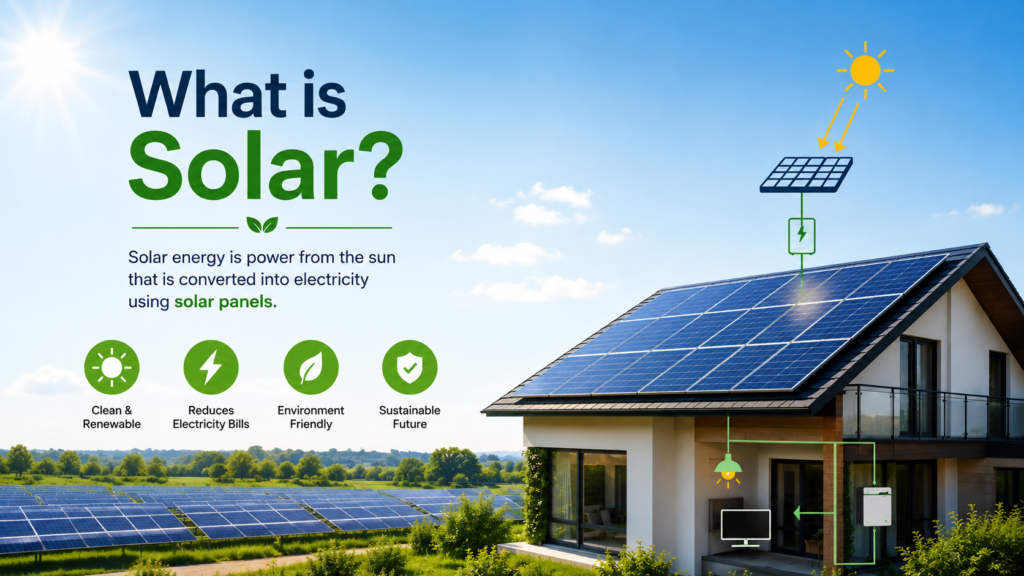
A solar system is a setup that uses sunlight to produce electricity for homes, businesses, factories, and other buildings. It mainly includes solar panels, an inverter, a mounting structure, electrical wiring, and in some cases, a battery for storing extra power. Instead of depending only on electricity from the power grid, a solar system helps you generate your own clean and renewable energy.
As sunlight falls on the solar panels, they convert it into electricity. This electricity is then changed into a form that can safely power lights, fans, televisions, refrigerators, air conditioners, and other electrical appliances. If your system produces more electricity than you need, the extra power can often be sent to the electricity grid through a net meter, depending on your local electricity provider’s rules.
Today, solar energy is becoming one of the most popular sources of electricity in India. Rising electricity bills, government support, and better solar technology have encouraged many homeowners and businesses to switch to solar power. A properly designed solar system can reduce monthly electricity bills, provide long-term savings, and lower your dependence on traditional electricity sources.
There are three main types of solar systems: On-Grid Solar System, Off-Grid Solar System, and Hybrid Solar System. Each type is designed for different power needs and locations. Choosing the right system depends on your electricity usage, budget, roof space, and whether you need power backup during electricity outages.
At Natural Power, we help homeowners, businesses, and industries choose the right solar solution based on their energy needs. Our experienced team handles everything from site inspection and system design to installation and after-sales support, making the process simple and hassle-free.
In this guide, you’ll learn what a solar system is, how it works, its main components, the different types available, their benefits, estimated costs in India, government subsidies, and practical tips to help you make an informed decision before installing a solar system.
How Does a Solar System Work?
A solar system works by converting sunlight into electricity that you can use to power your home or business. It may sound complicated, but the process is actually very simple. Every part of the solar system has a specific job, and together they produce clean, reliable electricity throughout the day.
Step 1: Solar Panels Capture Sunlight
The process begins with the solar panels installed on your rooftop or another open area where they receive maximum sunlight. Each panel contains many small solar cells that absorb sunlight during the day.
When sunlight falls on these solar cells, they start producing Direct Current (DC) electricity. The amount of electricity generated depends on factors such as the intensity of sunlight, weather conditions, the direction of the panels, and the size of the solar system.
Step 2: The Inverter Converts DC Electricity into AC Electricity
The electricity produced by solar panels is called Direct Current (DC). However, most household appliances such as lights, fans, televisions, refrigerators, washing machines, and air conditioners use Alternating Current (AC) electricity.
This is where the solar inverter plays an important role. It converts DC electricity into AC electricity, making it safe and ready to use in your home or business.
Step 3: Electricity Powers Your Home or Business
After the inverter converts the electricity, it flows through your building’s electrical system and powers your appliances just like regular electricity from the grid.
During sunny hours, your solar system can supply most or all of your electricity needs, depending on the system size and your energy usage. This helps reduce the amount of electricity you buy from the power company, leading to lower monthly electricity bills.
Step 4: Extra Electricity is Sent to the Grid
If your on-grid solar system generates more electricity than you are using, the extra electricity is sent back to the power grid through a net meter.
The net meter records both the electricity you use from the grid and the extra electricity your solar system sends back. In many areas of India, this can help reduce your electricity bill based on your local electricity provider’s net metering policy.
Step 5: Electricity is Used from the Grid When Needed
Solar panels generate electricity only when there is enough sunlight. During the night or on days with very low sunlight, your home automatically uses electricity from the power grid.
If you have a hybrid solar system or an off-grid solar system with batteries, the stored solar energy can be used during power cuts or at night, depending on the battery capacity.
How Does a Solar System Work? (Quick Summary)
The working of a solar system can be explained in five simple steps:
Solar panels absorb sunlight.
Solar cells generate DC electricity.
The solar inverter converts DC into AC electricity.
Your home or business uses the electricity.
Extra electricity is sent to the grid or stored in batteries, depending on the type of solar system.
Although the process happens in just a few seconds, it repeats continuously throughout the day whenever sunlight is available. This allows you to generate clean electricity, reduce your electricity bills, and use renewable energy without changing the way you use your electrical appliances.
Main Components of a Solar System
A solar system is made up of several important parts that work together to produce electricity from sunlight. Each component has a specific role, and if one part does not work properly, the overall performance of the system can be affected.
Understanding these components will help you know how a solar system works and why each part is important before installing one for your home or business.
1. Solar Panels
Solar panels are the most visible and important part of a solar system. They are usually installed on rooftops or open spaces where they receive maximum sunlight throughout the day.
Each solar panel contains many small solar cells that absorb sunlight and convert it into Direct Current (DC) electricity. The more sunlight the panels receive, the more electricity they can generate.
High-quality solar panels can perform efficiently for 25 years or more with proper installation and regular maintenance. They are built to withstand rain, heat, and different weather conditions, making them a long-term investment.
Main functions of solar panels:
Capture sunlight
Generate DC electricity
Reduce dependence on grid electricity
Produce clean and renewable energy
2. Solar Inverter
The solar inverter is often called the heart of a solar system because it manages the electricity produced by the solar panels.
Solar panels generate DC electricity, but most electrical appliances use Alternating Current (AC) electricity. The inverter converts DC into AC so that your home or business can safely use the electricity.
Modern solar inverters also monitor the performance of the system and help improve its efficiency.
Main functions of a solar inverter:
Converts DC electricity into AC electricity
Supplies usable electricity to your home or business
Monitors system performance
Helps improve overall efficiency
3. Solar Battery
A solar battery stores extra electricity generated during the day so that it can be used later when sunlight is not available.
Batteries are mainly used in off-grid and hybrid solar systems. They provide backup power during electricity outages and allow you to use stored solar energy at night.
For most on-grid solar systems, a battery is not required because extra electricity is sent to the power grid through net metering.
Main functions of a solar battery:
Stores extra solar energy
Provides backup during power cuts
Supplies electricity at night
Reduces dependence on the power grid
4. Net Meter
A net meter is a special electricity meter used in on-grid solar systems.
It records both the electricity you take from the power grid and the extra electricity your solar system sends back. This helps calculate your electricity bill according to your local electricity provider’s net metering policy.
If your solar system produces more electricity than you use during the day, the extra power can be exported to the grid.
Main functions of a net meter:
Measures electricity imported from the grid
Measures electricity exported to the grid
Supports net metering
Helps reduce electricity bills
5. Mounting Structure
The mounting structure holds the solar panels firmly in place. It is designed to keep the panels secure during strong winds, rain, and other weather conditions.
The panels are installed at the correct angle and direction to receive maximum sunlight, which helps improve electricity generation.
Good-quality mounting structures are made from strong, corrosion-resistant materials for a long service life.
Main functions of the mounting structure:
Supports the solar panels
Keeps panels safely secured
Provides the correct tilt angle
Improves energy generation
6. Solar Cables and Electrical Wiring
Solar cables connect all the components of the solar system, including the solar panels, inverter, battery (if installed), and the electrical distribution system.
High-quality cables help reduce power loss and ensure safe and efficient operation.
Proper wiring should always be carried out by trained professionals to meet safety standards.
Main functions of solar cables:
Carry electricity safely
Connect all system components
Reduce energy loss
Improve system reliability
7. Solar Monitoring System
Many modern solar systems include a monitoring system that allows you to check how much electricity your system is generating.
You can often view this information through a mobile app or web portal. Monitoring helps you track daily, monthly, and yearly energy production and quickly identify any issues that may affect performance.
Main functions of a monitoring system:
Tracks electricity generation
Monitors system performance
Detects possible faults
Helps maintain maximum efficiency
Summary of Solar System Components
| Component | Purpose |
|---|---|
| Solar Panels | Convert sunlight into DC electricity |
| Solar Inverter | Converts DC electricity into AC electricity |
| Solar Battery | Stores extra electricity for later use |
| Net Meter | Measures electricity imported and exported |
| Mounting Structure | Holds the solar panels securely |
| Solar Cables | Connect all components safely |
| Monitoring System | Tracks system performance and electricity generation |
All these components work together to create a safe, efficient, and reliable solar power system. Choosing high-quality equipment and having it installed by experienced professionals can improve performance, increase the system’s lifespan, and help you get the maximum return on your investment.
Types of Solar Systems
Not every solar system works in the same way. The right type of solar system depends on your electricity usage, budget, location, and whether you need backup power during electricity cuts.
There are three main types of solar systems used in homes, businesses, and industries:
On-Grid Solar System
Off-Grid Solar System
Hybrid Solar System
Let’s understand each type in simple words.
1. On-Grid Solar System
An On-Grid Solar System is connected to the local electricity grid. It generates electricity during the day, and your home or business uses this power first. If the system produces more electricity than you need, the extra power is sent to the electricity grid through a net meter.
At night or when solar panels are not producing enough electricity, your property automatically uses electricity from the grid.
This is the most popular type of solar system in India because it helps reduce electricity bills without requiring battery storage.
Benefits of an On-Grid Solar System
Lower electricity bills
No battery maintenance
Lower installation cost compared to battery-based systems
Suitable for homes, offices, shops, schools, and commercial buildings
Supports net metering where available
Things to Consider
It depends on the electricity grid.
During a power cut, the solar system also stops supplying electricity for safety reasons unless battery backup is available.
Best for: Homes and businesses that have a reliable electricity supply and want to save on monthly electricity bills.
2. Off-Grid Solar System
An Off-Grid Solar System works independently without being connected to the electricity grid.
It includes solar panels, a solar inverter, batteries, and other equipment. During the day, the system powers your appliances and charges the batteries. At night or during cloudy weather, the stored energy in the batteries is used.
This type of system is commonly installed in remote locations where grid electricity is not available or is highly unreliable.
Benefits of an Off-Grid Solar System
Works without the electricity grid
Provides power in remote areas
Offers backup during power outages
Greater energy independence
Things to Consider
Higher installation cost because batteries are required
Batteries need regular maintenance and replacement after several years
System design must match your daily electricity usage
Best for: Farms, remote villages, construction sites, and locations where electricity is unavailable or unreliable.
3. Hybrid Solar System
A Hybrid Solar System combines the features of both on-grid and off-grid systems.
It is connected to the electricity grid and also includes battery storage. During the day, it powers your home and charges the batteries. If there is extra electricity, it may be sent to the grid, depending on your local net metering policy. During a power cut, the batteries can continue supplying electricity to selected appliances.
A hybrid system offers greater flexibility and backup, making it a good option for areas with frequent power outages.
Benefits of a Hybrid Solar System
Provides backup during power cuts
Stores extra solar energy in batteries
Reduces electricity bills
Offers greater energy security
Can use both battery storage and grid electricity
Things to Consider
Higher initial investment than an on-grid system
Battery maintenance and replacement should be considered
Professional system design is important for the best performance
Best for: Homes, hospitals, offices, and businesses that need both electricity savings and reliable backup power.
Comparison of On-Grid, Off-Grid, and Hybrid Solar Systems
| Feature | On-Grid | Off-Grid | Hybrid |
|---|---|---|---|
| Connected to Electricity Grid | Yes | No | Yes |
| Battery Required | No | Yes | Yes |
| Backup During Power Cuts | No | Yes | Yes |
| Net Metering | Yes (where available) | No | Yes (where available) |
| Installation Cost | Lower | Higher | Higher |
| Electricity Bill Savings | High | Not Applicable | High |
| Best For | Homes and businesses with reliable grid power | Remote areas without grid access | Places that need both savings and backup |
Which Type of Solar System is Best?
There is no single solar system that is best for everyone. The right choice depends on your electricity needs and location.
Choose an On-Grid Solar System if your main goal is to reduce electricity bills and you have a reliable grid connection.
Choose an Off-Grid Solar System if you do not have access to the electricity grid or need a completely independent power source.
Choose a Hybrid Solar System if you want lower electricity bills along with backup power during electricity outages.
Before selecting a solar system, it is a good idea to have your electricity usage, roof space, and energy requirements assessed by an experienced solar installer. A properly designed system can provide better performance, higher savings, and reliable operation for many years.
What is a solar system?
How does a solar system work?
What are the three main types of solar systems?
On-Grid Solar System
Off-Grid Solar System
Hybrid Solar System
Each type is designed for different energy needs and locations.
Which solar system is best for a home?
An On-Grid Solar System is suitable for most homes with a reliable electricity supply.
A Hybrid Solar System is a good choice if you want lower electricity bills along with backup power during electricity outages.
An Off-Grid Solar System is mainly used in places where electricity from the grid is not available.
How much electricity can a solar system generate?
System size
Sunlight available at your location
Weather conditions
Panel efficiency
Installation angle
Shading
A properly designed solar system can generate enough electricity to meet a significant portion of your daily energy needs.
Can solar panels work on cloudy or rainy days?
Best Solar for Factory: Power Your Industry with Clean, Cost-Efficient Energy
- August 6, 2025
Solar Installation Process
- July 22, 2026