

A solar inverter is a device that converts the DC electricity produced by solar panels into AC electricity that can be used by your home, business, or the electrical grid. In simple words, solar panels generate electricity in a form that most household appliances cannot use directly, so the solar inverter changes it into usable power. It is one of the most important parts of a solar power system.
Depending on the type, a solar inverter can also help track solar power production, manage batteries, protect the system from electrical problems, and connect solar power safely to the grid. Common types include on-grid, off-grid, hybrid, string, and microinverters.
In this guide, you will learn what a solar inverter does, how a solar inverter works, the different types, what MPPT means, how to choose the right inverter, and what to consider before installing one for your home or business.
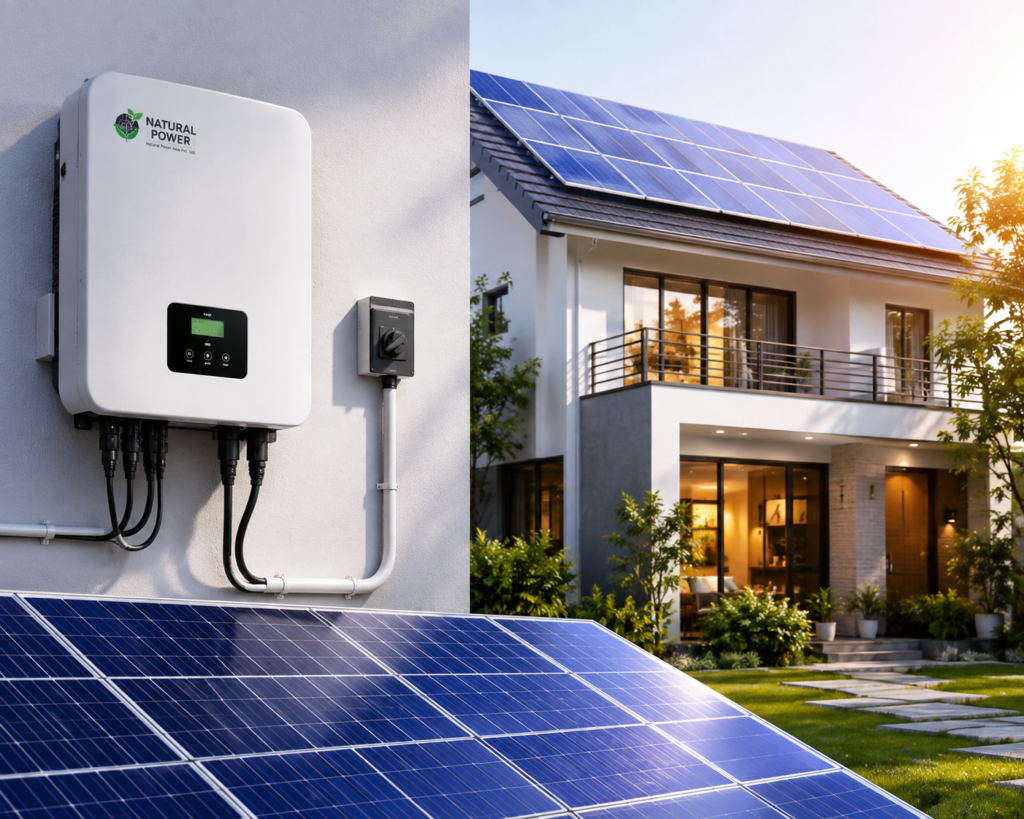
Table of Contents
A solar inverter is a key part of a solar power system that changes the DC electricity produced by solar panels into AC electricity used by most homes and businesses. Solar panels generate electricity when sunlight falls on them, but that electricity is not directly suitable for most everyday appliances. The solar inverter converts it into the right form so it can be used safely.
A solar inverter does more than just convert electricity. Depending on its type, it can also help get more power from the solar panels, monitor solar generation, manage a battery, and connect the system to the electricity grid.
In simple terms, you can think of the solar inverter as the bridge between your solar panels and the electricity you use every day.
For example:
Solar Panels → DC Electricity → Solar Inverter → AC Electricity → Home / Business / Grid
How Does a Solar Inverter Work?
A solar inverter works by taking the DC electricity generated by solar panels, converting it into AC electricity, and then supplying that electricity to your home, business, or the electrical grid. Modern solar inverters can also monitor solar production, manage batteries in suitable systems, and help keep the system operating safely.
The process is easier to understand in a few simple steps:
1. Solar panels generate DC electricity
When sunlight falls on solar panels, the solar cells convert that sunlight into electrical energy. The electricity produced by the panels is Direct Current (DC).
2. DC electricity reaches the solar inverter
The DC electricity then travels from the solar panels to the solar inverter. Depending on the system design, several panels may be connected to one string inverter, or each panel may have its own microinverter.
3. The inverter finds the best available solar power
Many solar inverters use MPPT (Maximum Power Point Tracking) to adjust the solar system’s operating point and help obtain the available power from the panels as sunlight conditions change.
4. The inverter converts DC into AC
The solar inverter then changes the DC electricity into Alternating Current (AC). AC electricity is the type commonly used by electrical appliances and the electricity grid.
5. The AC electricity is used
The converted electricity can be used to run appliances in your home or business. In a grid-connected solar system, any suitable excess electricity may also be sent to the grid according to the applicable system and local rules.
6. The inverter keeps monitoring the system
A modern solar inverter can also monitor system performance and provide information about solar generation. Some systems can also work with batteries for energy storage and backup, depending on the inverter and system design.
In simple terms:
Sunlight → Solar Panels → DC Electricity → Solar Inverter → AC Electricity → Home/Business/Grid
This is why the solar inverter is one of the most important components of a solar power system. Without the required power conversion equipment, the DC electricity produced by standard solar panels cannot directly supply most AC appliances.
What Does a Solar Inverter Do?
A solar inverter does more than convert electricity from DC to AC. It helps your solar power system turn the electricity produced by the panels into usable power and, depending on the inverter type, can also monitor the system, manage a battery, and work with the electricity grid.
Here are the main things a solar inverter does:
1. Converts DC Electricity into AC Electricity
Solar panels produce Direct Current (DC) electricity. Most appliances in your home or business use Alternating Current (AC) electricity. The solar inverter converts the DC power from the panels into AC power so it can be used by lights, fans, refrigerators, computers, and other electrical appliances.
2. Helps Get More Power from Solar Panels
Many solar inverters use MPPT (Maximum Power Point Tracking). It helps the inverter adjust to changing sunlight conditions and find an operating point that can make good use of the available power from the solar panels.
3. Connects Solar Power to the Electricity Grid
In a grid-connected solar system, the inverter helps match the solar electricity with the requirements of the grid. It can also control how the solar system responds when grid conditions change.
4. Monitors Solar System Performance
Modern solar inverters can record information about your solar system. Depending on the model, you may be able to check solar generation, system performance, and fault information through a display, mobile app, or online monitoring platform.
5. Supports Battery Storage in Suitable Systems
Some solar inverters are designed to work with batteries. A hybrid inverter, for example, can manage solar power and battery charging and discharging in a suitable solar-plus-battery system.
6. Helps Keep the System Safe
Solar inverters also include control and protection features. In grid-connected systems, the inverter can disconnect from the grid when required by its operating and safety settings. This is important for safe grid operation.
In simple words
Think of a solar inverter as the control point of your solar power system. It takes the electricity generated by your solar panels, converts it into a form your home or business can use, and may also help with monitoring, grid connection, battery storage, and system protection.
The exact functions depend on the type and model of solar inverter, so the right inverter should be selected based on your solar system, electricity needs, roof conditions, and whether you need battery backup.
Types of Solar Inverters
There is no single solar inverter that is best for every solar system. The right type depends on factors such as whether your home is connected to the electricity grid, whether you need battery backup, the size and layout of your solar system, and whether parts of your roof receive shade.
The main types of solar inverters include on-grid, off-grid, hybrid, string, and microinverters. Some of these terms describe how the inverter works with the grid, while others describe where the power conversion takes place.
On-Grid Solar Inverter
An on-grid solar inverter, also called a grid-tied inverter, connects your solar system to the electricity grid. It converts the DC electricity from your solar panels into AC electricity for use in your home or business. When your solar system produces more electricity than you are using, the extra power can be sent to the grid, depending on your connection and applicable electricity rules.
An important point is that a standard on-grid inverter generally does not provide backup power during a grid outage. It is designed to stop supplying power to the grid when the grid is unavailable, which is an important safety feature.
Best suited for: Homes and businesses that have a reliable grid connection and want to use solar to reduce their electricity bills.
Off-Grid Solar Inverter
An off-grid solar inverter is designed for a solar system that works without depending on the electricity grid. These systems normally use batteries to store electricity so that power can be available when sunlight is not available.
Off-grid systems can be useful in locations where grid electricity is unavailable or where a connection to the grid is not practical.
Best suited for: Remote locations, farms, and properties without a suitable grid connection.
Hybrid Solar Inverter
A hybrid solar inverter combines solar power management with battery storage. It can work with solar panels, batteries, and the electricity grid, depending on the system design.
During the day, solar energy can power your home and charge the battery. Stored energy can then be used later when solar generation is low. A properly designed hybrid system can also provide backup power during a grid outage.
Best suited for: Homes and businesses that want solar power along with battery storage and backup capability.
String Inverter
A string inverter is connected to a group, or “string,” of solar panels. The panels send their combined DC electricity to one inverter, which converts it into AC electricity.
String inverters are widely used because their design is relatively simple and they are suitable for many residential and commercial solar installations. However, roof layout and shading need to be considered when designing the strings.
Best suited for: Solar systems where panels have similar sunlight and shading conditions.
Microinverter
A microinverter is a small inverter installed with an individual solar panel. Instead of sending the DC electricity from many panels to one central inverter, each panel can convert its electricity into AC separately.
This can be useful when a roof has different directions, slopes, or partial shading because the panels can operate more independently. Microinverters can also provide panel-level monitoring in suitable systems.
Best suited for: Roofs with multiple orientations, complex layouts, or partial shading.
Quick Comparison of Solar Inverter Types
| Inverter Type | Grid Connection | Battery | Common Use |
|---|---|---|---|
| On-grid | Yes | Usually no | Homes and businesses connected to the grid |
| Off-grid | No | Yes | Areas without grid access |
| Hybrid | Yes | Yes | Solar + battery + backup |
| String | Usually yes | Depends on system | Common residential and commercial systems |
| Microinverter | Usually yes | Depends on system | Roofs with shading or different orientations |
Which solar inverter is right for you? It depends on your electricity needs, roof design, grid connection, battery requirements, and overall solar system design. A qualified solar professional should assess these factors before recommending the inverter.
Solar Inverter vs Normal Inverter: What Is the Difference?
A solar inverter and a normal home inverter are not the same thing. Both can be involved in supplying electricity to appliances, but they are designed for different purposes.
A normal inverter is mainly used to provide backup power from a battery when the electricity supply goes off. A solar inverter is designed to work with solar panels and convert the DC electricity they produce into AC electricity that can be used by your home, business, or the grid.
Here are the main differences:
| Feature | Solar Inverter | Normal Inverter |
|---|---|---|
| Main purpose | Converts solar power into usable AC power | Provides backup power |
| Works with solar panels | Yes | Not usually |
| Converts solar DC power | Yes | Generally no |
| MPPT | Common in solar inverters | Usually not |
| Battery | Depends on inverter type | Usually used |
| Grid connection | Depends on inverter type | Generally used for backup, not solar grid export |
| Solar monitoring | Available in many models | Usually limited |
| Solar power optimization | Yes, depending on model | No |
| Suitable for rooftop solar | Yes | Not by itself |
How Does a Normal Inverter Work?
A typical home inverter stores electricity in a battery when grid power is available. When there is a power cut, it uses the stored energy to provide electricity to selected appliances.
This makes a normal inverter useful for short-term backup, but it does not replace a solar inverter in a standard rooftop solar system.
How Does a Solar Inverter Work?
A solar inverter receives DC electricity from the solar panels and converts it into AC electricity. Depending on its type, it may also connect with the grid, manage a battery, monitor solar generation, and provide other control and protection functions.
For example, an on-grid solar inverter is designed to work with the electricity grid, while a hybrid solar inverter can be designed to work with solar panels, batteries, and the grid.
Can a Normal Inverter Be Used With Solar Panels?
It depends on the equipment. A standard home inverter is generally not designed to directly perform the functions required of a solar inverter. Solar systems need equipment that is designed for the voltage, current, control, protection, and operating requirements of the solar panels.
If you already have a home inverter and are planning to install solar panels, it is better to have the complete system assessed by a qualified solar professional rather than assuming the existing inverter can be used.
Which One Do You Need?
If your main requirement is backup power during electricity cuts, a normal inverter and battery may be suitable.
If you want to generate electricity from solar panels, you need an appropriate solar power conversion system.
If you want solar generation, battery storage, and backup power, a suitable hybrid solar inverter may be an option.
The right choice depends on your electricity usage, solar system size, grid connection, battery requirement, and the design of your home or business solar system.
What Is MPPT in a Solar Inverter?
MPPT stands for Maximum Power Point Tracking. It is a feature found in many modern solar inverters that helps the system get useful power from solar panels as sunlight conditions change.
To understand MPPT, first remember that the amount of electricity produced by solar panels is not always the same. Sunlight, temperature, shade, and other conditions can affect solar panel output throughout the day.
How Does MPPT Work?
A solar panel can produce different amounts of power at different voltage and current levels. The solar inverter continuously checks these conditions and adjusts the panel’s operating point to find a suitable level where the available solar power can be used effectively.
In simple words, MPPT helps the solar inverter find the best operating point for the solar panels under the current conditions.
For example, imagine that your solar panels are producing less power because the sunlight has changed. The inverter can adjust its operation to make better use of the power that is available from the panels.
Why Is MPPT Important?
MPPT can be useful because solar panel output changes during the day. Without suitable power tracking, the system may not make the best use of the available energy under changing conditions.
The benefit can be especially important when solar panels experience different operating conditions, such as changes in sunlight or temperature.
However, MPPT does not create extra electricity. It helps the inverter operate the solar panels at a suitable point to make effective use of the electricity they can produce.
Do All Solar Inverters Have MPPT?
Many modern solar inverters include MPPT, but the number of MPPT inputs and their operating ranges can vary between models.
For example, some inverters have one MPPT, while others have multiple MPPTs. Multiple MPPTs can be useful when different groups of solar panels have different orientations or receive different amounts of sunlight.
Therefore, MPPT specifications should be considered when selecting a solar inverter, especially for a roof with multiple directions or different shading conditions.
MPPT in Simple Words
Think of MPPT as a smart adjustment system inside the solar inverter. It keeps checking the solar panels and helps the inverter find a suitable operating point so the available solar energy can be used effectively.
The actual performance depends on the solar panels, inverter specifications, system design, weather, shading, temperature, and other site conditions.
What Are the Benefits of a Solar Inverter?
A solar inverter is an important part of a solar power system because it converts solar electricity into a form that can be used by your home or business. Depending on the type of inverter and system design, it can also provide several other useful functions.
1. Makes Solar Electricity Usable
Solar panels produce DC electricity, while most appliances use AC electricity. The solar inverter converts the DC electricity into AC electricity so it can be used to power electrical loads in your home or business.
2. Helps Use Available Solar Power Effectively
Many solar inverters use MPPT technology to track a suitable operating point for the solar panels as sunlight and temperature change. This helps the system make effective use of the power available from the panels.
3. Allows Solar Power to Work With the Grid
An appropriate grid-connected solar inverter allows your solar system to work with the electricity grid. This makes it possible to use solar electricity in your property and, where permitted, send suitable excess electricity to the grid.
4. Helps Monitor Solar Performance
Many modern solar inverters provide information about your solar system’s performance. Depending on the model, you may be able to check electricity generation, system status, and error information through a display or monitoring application.
This can make it easier to understand how your solar system is performing.
5. Can Support Battery Storage
Some solar inverters are designed to work with batteries. A suitable hybrid or off-grid system can manage solar generation and stored energy, depending on the equipment and system design.
This can be useful for people who want to store solar energy for later use or have backup power during a grid outage.
6. Provides System Protection Features
Solar inverters include control and protection functions that help the solar system operate safely. In grid-connected systems, the inverter can detect certain grid conditions and stop operating with the grid when required.
The exact protection features depend on the inverter model and applicable standards.
7. Supports Different Solar System Designs
Solar inverters are available for different applications, including residential solar, commercial solar, rooftop solar, off-grid systems, and hybrid solar systems.
The correct inverter depends on factors such as solar panel capacity, electricity usage, grid connection, battery requirements, roof conditions, and the overall system design.
In Simple Words
The main benefit of a solar inverter is simple: it turns the electricity produced by your solar panels into usable power. Modern inverters can also help with power tracking, monitoring, grid connection, battery storage, and system protection.
However, the features and benefits are different for each inverter type. Choosing the right inverter is therefore an important part of designing a safe and effective solar power system.
How to Choose the Right Solar Inverter?
Choosing the right solar inverter is important because the inverter needs to work correctly with your solar panels, electrical loads, and, in some systems, the electricity grid or battery. There is no single inverter that is best for every home or business.
Before choosing a solar inverter, consider the following factors.
1. Know Your Solar System Size
Start by knowing the planned capacity of your solar panel system. For example, you may be considering a 3 kW, 5 kW, 10 kW, or larger solar system.
The inverter should be suitable for the solar panel capacity and the electrical characteristics of the panels. The final size should be decided using the inverter manufacturer’s specifications and proper system design rather than choosing an inverter based only on the kW number.
2. Choose the Right Type of Inverter
Think about how you want to use your solar power.
On-grid inverter: Suitable for systems connected to the electricity grid.
Off-grid inverter: Designed for systems that operate without a grid connection and normally use batteries.
Hybrid inverter: Designed to work with solar, batteries, and the grid, depending on the system.
String inverter: Connects to a group of solar panels connected in a string.
Microinverter: Converts power at the individual solar-panel level.
Your electricity supply, backup requirement, roof design, and budget can help determine which option is suitable.
3. Check the MPPT Features
Look at the number of MPPTs and the MPPT voltage range of the inverter.
Multiple MPPTs can be useful when different groups of solar panels have different orientations or receive different levels of sunlight. The solar panel configuration must also stay within the inverter’s voltage and current limits.
4. Check Inverter Efficiency
Solar inverter efficiency tells you how effectively the inverter converts the electricity it receives into usable electricity.
A higher efficiency rating can mean less energy is lost during conversion. However, efficiency should not be the only factor you consider. The inverter’s design, operating range, reliability, warranty, service support, and suitability for your solar system also matter.
5. Consider Your Battery Requirement
If you want battery storage, make sure the inverter is designed to work with the battery system you plan to install.
If you do not need battery backup, an on-grid solar inverter may be suitable for a grid-connected solar system, depending on your requirements.
6. Check Monitoring Features
Many modern solar inverters offer system monitoring through a display, website, or mobile application.
Monitoring can help you see solar generation, system status, and possible fault information. This can be useful when checking whether your solar system is working as expected.
7. Check Warranty and After-Sales Support
A solar inverter is an important electrical component, so don’t look only at the purchase price.
Before buying, check:
Product warranty
Service availability
Replacement process
Local technical support
Manufacturer’s service network
Availability of spare parts, where applicable
Good after-sales support can be especially important if the inverter develops a fault during its operating life.
8. Consider Your Roof and Site Conditions
The design of your roof can affect the type and configuration of inverter that works best.
Consider factors such as:
Roof direction
Different roof sections
Partial shading
Number of solar panels
Available installation space
Ambient temperature
Cable distance
Electrical connection
For example, a roof with different orientations or shading conditions may require a different design from a simple roof where all panels receive similar sunlight.
9. Check Safety and Compliance Requirements
The inverter should be suitable for the electrical system and installed according to applicable electrical, utility, and safety requirements.
For grid-connected solar systems, the equipment must meet the requirements that apply to the particular installation and electricity connection.
What Is the Best Solar Inverter for Your Home?
There is no universal “best solar inverter” for every home.
The right choice depends on your solar system size, electricity consumption, grid connection, backup requirement, battery plans, roof conditions, inverter specifications, warranty, and service support.
Instead of choosing an inverter only because it has a low price or a high number of features, compare the inverter with your actual solar system requirements. A properly designed system can help ensure that the solar panels and inverter work together as intended.
If you are unsure which inverter is suitable, a qualified solar professional can assess your property and recommend an inverter based on your electricity needs and site conditions.
What Size Solar Inverter Do You Need for Your Home?
The right solar inverter size depends on your solar panel capacity, panel specifications, electricity usage, inverter limits, and the design of your solar system. A common mistake is to assume that the inverter size must always be exactly the same as the total solar panel capacity. In practice, the correct choice depends on the equipment and system design.
For example, a home may have a 3 kW, 5 kW, or 10 kW solar system, but the suitable inverter should be selected after checking the solar panels and the inverter manufacturer’s specifications.
Solar Panel Capacity vs Inverter Capacity
Solar panel capacity is usually measured in kilowatts (kW). It represents the rated power of the solar panels under specified test conditions.
Inverter capacity refers to the amount of power the inverter is designed to handle on its AC output.
These two numbers are related, but they are not necessarily identical.
A solar professional may design a system where the total DC capacity of the solar panels is different from the inverter’s AC rating. This is sometimes done to make better use of the inverter under real operating conditions. However, the solar array must always remain within the inverter’s specified DC voltage, current, and power limits.
Examples of Common Solar System Sizes
| Solar System Size | Example Inverter Class |
|---|---|
| 1 kW | 1 kW-class inverter |
| 3 kW | 3 kW-class inverter |
| 5 kW | 5 kW-class inverter |
| 10 kW | 10 kW-class inverter |
These are simple examples, not fixed sizing rules. The actual inverter selection should be based on the complete system design.
What Should You Check Before Choosing Inverter Capacity?
1. Solar Panel Capacity
First, check the total rated capacity of the solar panels you plan to install.
2. Panel Voltage and Current
The inverter must be compatible with the voltage and current produced by the solar panels. The panel configuration must stay within the inverter’s specified operating range.
3. Maximum DC Input
Every inverter has a maximum DC input power and electrical limits. The planned solar array should not exceed the manufacturer’s permitted values.
4. Household Electricity Usage
Your electricity consumption also matters. If your home uses more electricity during the day, the solar system may need to be designed differently from a home with lower daytime consumption.
5. Battery Requirement
If you want battery storage or backup power, you need to make sure the selected inverter supports the battery technology and configuration being considered.
6. Roof Conditions
The number, direction, tilt, and shading of solar panels can affect the system design. These factors may also influence the number of MPPTs or the inverter configuration required.
Can You Use a Bigger Inverter?
A bigger inverter is not automatically better.
An inverter should be selected according to the solar array, electrical loads, manufacturer specifications, and the overall system design. Using an inverter that is unnecessarily large can affect system economics, while choosing one that is too small may restrict the usable output of the system.
How to Find the Right Solar Inverter Size
The safest approach is to start with your electricity consumption and planned solar panel capacity, then have the inverter selected based on the panel electrical specifications, inverter limits, roof conditions, grid requirements, and any battery needs.
For a residential solar installation, a qualified solar installer can calculate the appropriate inverter capacity rather than relying only on a simple kW-to-kW comparison.
In Simple Words
The right solar inverter size is the one that matches your solar panels and the needs of your electrical system. Don’t choose an inverter simply because its kW rating looks similar to your solar panel capacity. The complete system should be checked before installation.
How Long Does a Solar Inverter Last?
A solar inverter can operate for many years, but its actual lifespan depends on the inverter type, quality, installation, operating conditions, maintenance, and how the system is used. Unlike solar panels, which can continue producing power for several decades, an inverter may need to be replaced earlier during the life of a solar power system.
The exact lifespan is different for every product, so it is better to check the manufacturer’s specifications and warranty instead of relying on one fixed number.
What Affects Solar Inverter Lifespan?
Several factors can affect how long a solar inverter works.
1. Inverter Quality
The quality of the components and overall design can affect reliability and operating life. This is why it is important to consider the manufacturer, product specifications, warranty, and service support before buying.
2. Installation Quality
Correct installation is important for safe and reliable operation. The inverter should be installed according to the manufacturer’s instructions and applicable electrical requirements.
3. Heat and Temperature
Solar inverters produce heat while operating. Installing an inverter in a suitable location with proper ventilation can help it operate within its intended temperature range.
Very high temperatures can put additional stress on electronic components.
4. Dust, Moisture, and the Environment
The location of the inverter also matters. Dust, moisture, rain, and other environmental conditions can affect equipment if the inverter is not designed or installed appropriately for those conditions.
5. Electrical Conditions
Voltage changes, electrical faults, surges, and other conditions can affect electrical equipment. Suitable protection and correct system design are therefore important.
6. Maintenance and Monitoring
Regularly checking system performance can help identify unusual behaviour or fault messages early.
If your inverter shows repeated errors, unusual sounds, overheating warnings, or a sudden change in solar generation, the system should be checked by a qualified professional.
How Do You Know When a Solar Inverter Needs Replacement?
An inverter may need attention or replacement if it repeatedly develops faults, stops working, becomes unreliable, or reaches the end of its expected service life.
Some warning signs can include:
Frequent error messages
Unexpected shutdowns
Unusual overheating
Sudden or unexplained reduction in solar generation
Monitoring problems that continue after basic checks
Physical damage
A drop in solar generation does not always mean the inverter is faulty. Problems with solar panels, shading, wiring, weather, grid conditions, or other system components can also affect generation.
Solar Inverter Warranty
Warranty terms vary between manufacturers and models. Before purchasing a solar inverter, check:
Warranty period
What the warranty covers
Conditions that may apply
Service and replacement process
Availability of local support
A longer warranty can be useful, but warranty length should not be the only factor when comparing products.
In Simple Words
A solar inverter is an important long-term part of your solar system, but it does not necessarily last as long as the solar panels. Good product selection, proper installation, suitable operating conditions, and regular monitoring can help support reliable inverter operation.
Always check the manufacturer’s product information for the expected operating life and warranty of the specific solar inverter you are considering.
Solar Inverter Maintenance: How to Maintain a Solar Inverter
A solar inverter needs proper installation, a suitable operating environment, and regular monitoring to work reliably. Solar inverter maintenance is generally simple, but electrical connections and internal components should not be opened or repaired by an unqualified person.
You can follow these basic steps to help keep your solar inverter in good condition.
1. Keep the Area Around the Inverter Clear
Make sure the area around the inverter is clean and has enough space for proper ventilation. Do not place boxes, equipment, or other objects directly around the inverter if they can block airflow.
The installation location should also follow the manufacturer’s requirements for temperature, ventilation, moisture, and clearance.
2. Keep an Eye on the Inverter Display
Many solar inverters have a display or monitoring system that shows information about solar generation and system status.
Check occasionally for:
Error messages
Warning notifications
Unexpected shutdowns
Unusual changes in system performance
If the inverter repeatedly shows an error, refer to the manufacturer’s instructions or contact a qualified solar professional.
3. Monitor Your Solar Generation
Regularly checking your solar generation can help you notice unusual changes.
For example, if your system normally produces a certain amount of electricity under similar weather conditions but suddenly produces much less, it may be worth having the system checked.
However, lower generation does not always mean there is a problem with the inverter. Cloudy weather, rain, shade, dust on panels, grid conditions, and other system issues can also reduce solar generation.
4. Keep the Inverter Dry and Protected
Follow the manufacturer’s instructions for the inverter’s installation environment.
If you notice water entering the equipment, physical damage, or signs of moisture where it should not be present, do not open the inverter. Switch off the system only if it is safe to do so according to the manufacturer’s instructions and contact a qualified professional.
5. Check for Visible Damage
During a simple visual check, look for obvious signs such as:
Physical damage
Loose covers
Burn marks
Damaged cables
Unusual sounds
Signs of overheating
Do not touch damaged electrical components or exposed wiring.
6. Keep the Solar System Records
It can be useful to keep records of your solar generation, maintenance visits, inverter errors, and service work.
These records can help a technician understand how the system has been performing and identify changes over time.
7. Follow the Manufacturer’s Maintenance Instructions
Different solar inverters have different requirements. Always follow the manufacturer’s installation, operation, maintenance, and safety instructions.
If professional inspection or electrical testing is required, it should be carried out by a suitably qualified technician.
Does a Solar Inverter Need Regular Servicing?
The level of servicing depends on the inverter, solar system, installation environment, and manufacturer’s recommendations.
Even when an inverter does not require frequent servicing, regular performance monitoring is useful. It can help identify faults or changes in solar generation before they become larger problems.
When Should You Call a Professional?
Contact a qualified solar or electrical professional if:
The inverter repeatedly shows fault messages
The inverter stops working
Solar generation drops unexpectedly
You notice burning smells or unusual overheating
Cables or electrical components appear damaged
The system has experienced an electrical fault
You need to open, repair, or replace the inverter
Never open a solar inverter or attempt electrical repairs yourself unless you are properly qualified and authorized to do so.
In Simple Words
Solar inverter maintenance mainly means keeping the installation area suitable, monitoring system performance, checking for visible problems, and responding to warnings when they appear.
Proper installation and professional servicing are more important than trying to perform complicated maintenance yourself. Always follow the manufacturer’s instructions and use a qualified professional for electrical work.
Common Solar Inverter Problems and Their Solutions
A solar inverter can sometimes show an error, stop working, or produce less power than expected. Not every inverter problem means that the inverter itself is damaged. Issues with solar panels, wiring, the electricity grid, weather, or other parts of the system can also affect its performance.
Here are some common solar inverter problems and what they may mean.
1. Solar Inverter Is Not Turning On
If your solar inverter is not turning on, there may be several possible reasons.
The system may not be receiving enough solar power, there may be a grid or electrical issue, or the inverter may have detected a fault.
First, check the inverter display or monitoring application for any warning or error message. If the inverter remains off when it should be operating, contact a qualified solar professional.
Do not open the inverter or touch electrical connections yourself.
2. Solar Inverter Shows an Error Message
Modern solar inverters can display error codes or warning messages when they detect an unusual condition.
The meaning of an error code depends on the inverter manufacturer and model.
If you see an error:
Note the exact error code or message.
Check the manufacturer’s user manual.
Check whether the problem continues.
Contact a qualified technician if the error does not clear or keeps returning.
Avoid guessing the meaning of an error because different inverter brands can use different codes.
3. Solar Inverter Is Producing Less Power
A sudden reduction in solar generation can have many causes.
Possible reasons include:
Cloudy or rainy weather
Shade falling on the solar panels
Dust or dirt on the panels
High temperatures
Grid conditions
Panel or wiring problems
Inverter faults
Changes in electricity usage or system operation
Compare the system’s performance with similar weather conditions before assuming the inverter is faulty.
If the reduction continues without an obvious reason, a professional inspection can help identify the cause.
4. Solar Inverter Is Overheating
Solar inverters produce heat during normal operation. However, excessive temperature can cause the inverter to reduce its output or shut down, depending on its design and protection settings.
Possible causes can include:
Poor ventilation
Very high ambient temperature
Blocked airflow
Incorrect installation location
Equipment faults
Keep the area around the inverter clear and follow the manufacturer’s installation requirements.
If the inverter repeatedly reports an overheating warning, contact a qualified professional.
5. Solar Inverter Keeps Shutting Down
An inverter may shut down when it detects conditions outside its normal operating range.
For a grid-connected system, changes or problems with the electricity grid can also cause the inverter to disconnect.
Other possible causes include:
Grid voltage issues
Frequency issues
DC-side problems
Excessive temperature
Electrical faults
Internal inverter faults
The exact cause can only be identified by checking the inverter’s error information and the complete solar system.
6. Solar Inverter Is Not Connecting to the Grid
A grid-connected solar inverter needs suitable grid conditions to operate with the electricity network.
If the grid voltage or frequency is outside the inverter’s permitted operating range, the inverter may disconnect until conditions return to an acceptable range.
If the problem happens repeatedly, contact your solar installer or a qualified technician to check the system.
7. Solar Inverter Monitoring Is Not Working
Some solar inverters allow users to monitor their system through a mobile application or online platform.
If monitoring stops working, the solar system itself may still be producing electricity. The issue could be related to the internet connection, communication equipment, monitoring settings, or the inverter.
Check the manufacturer’s monitoring instructions before contacting support.
8. Solar Inverter Makes an Unusual Sound
Some inverters can produce normal operating sounds, depending on their design and cooling system.
However, if you notice a new or unusual sound, especially together with an error message, overheating, burning smell, or sudden reduction in solar generation, stop trying to troubleshoot it yourself and contact a qualified professional.
Can You Fix a Solar Inverter Yourself?
It is generally safe for a homeowner to check the display, monitoring application, and surrounding area visually, provided there is no need to touch electrical components.
However, solar inverters contain electrical components and may have dangerous voltages even when the system is not producing power.
Do not open the inverter, disconnect cables, or attempt electrical repairs unless you are properly trained and qualified to do so.
When Should You Contact a Solar Professional?
Contact a qualified professional when:
The inverter repeatedly shows an error
The system stops generating electricity
The inverter repeatedly shuts down
You notice overheating or physical damage
Electrical cables appear damaged
There is a burning smell
Grid-related faults continue
The system needs repair, testing, or replacement
In Simple Words
A solar inverter problem does not always mean the inverter needs to be replaced. The cause may be related to the panels, grid, wiring, temperature, or another part of the solar system.
Start by checking the inverter’s warning or error message and the manufacturer’s instructions. For electrical faults or repairs, always use a qualified professional.
Common Solar Inverter Problems and Their Solutions
A solar inverter can sometimes show an error, stop working, or produce less power than expected. Not every inverter problem means that the inverter itself is damaged. Issues with solar panels, wiring, the electricity grid, weather, or other parts of the system can also affect its performance.
Here are some common solar inverter problems and what they may mean.
1. Solar Inverter Is Not Turning On
If your solar inverter is not turning on, there may be several possible reasons.
The system may not be receiving enough solar power, there may be a grid or electrical issue, or the inverter may have detected a fault.
First, check the inverter display or monitoring application for any warning or error message. If the inverter remains off when it should be operating, contact a qualified solar professional.
Do not open the inverter or touch electrical connections yourself.
2. Solar Inverter Shows an Error Message
Modern solar inverters can display error codes or warning messages when they detect an unusual condition.
The meaning of an error code depends on the inverter manufacturer and model.
If you see an error:
Note the exact error code or message.
Check the manufacturer’s user manual.
Check whether the problem continues.
Contact a qualified technician if the error does not clear or keeps returning.
Avoid guessing the meaning of an error because different inverter brands can use different codes.
3. Solar Inverter Is Producing Less Power
A sudden reduction in solar generation can have many causes.
Possible reasons include:
Cloudy or rainy weather
Shade falling on the solar panels
Dust or dirt on the panels
High temperatures
Grid conditions
Panel or wiring problems
Inverter faults
Changes in electricity usage or system operation
Compare the system’s performance with similar weather conditions before assuming the inverter is faulty.
If the reduction continues without an obvious reason, a professional inspection can help identify the cause.
4. Solar Inverter Is Overheating
Solar inverters produce heat during normal operation. However, excessive temperature can cause the inverter to reduce its output or shut down, depending on its design and protection settings.
Possible causes can include:
Poor ventilation
Very high ambient temperature
Blocked airflow
Incorrect installation location
Equipment faults
Keep the area around the inverter clear and follow the manufacturer’s installation requirements.
If the inverter repeatedly reports an overheating warning, contact a qualified professional.
5. Solar Inverter Keeps Shutting Down
An inverter may shut down when it detects conditions outside its normal operating range.
For a grid-connected system, changes or problems with the electricity grid can also cause the inverter to disconnect.
Other possible causes include:
Grid voltage issues
Frequency issues
DC-side problems
Excessive temperature
Electrical faults
Internal inverter faults
The exact cause can only be identified by checking the inverter’s error information and the complete solar system.
6. Solar Inverter Is Not Connecting to the Grid
A grid-connected solar inverter needs suitable grid conditions to operate with the electricity network.
If the grid voltage or frequency is outside the inverter’s permitted operating range, the inverter may disconnect until conditions return to an acceptable range.
If the problem happens repeatedly, contact your solar installer or a qualified technician to check the system.
7. Solar Inverter Monitoring Is Not Working
Some solar inverters allow users to monitor their system through a mobile application or online platform.
If monitoring stops working, the solar system itself may still be producing electricity. The issue could be related to the internet connection, communication equipment, monitoring settings, or the inverter.
Check the manufacturer’s monitoring instructions before contacting support.
8. Solar Inverter Makes an Unusual Sound
Some inverters can produce normal operating sounds, depending on their design and cooling system.
However, if you notice a new or unusual sound, especially together with an error message, overheating, burning smell, or sudden reduction in solar generation, stop trying to troubleshoot it yourself and contact a qualified professional.
Can You Fix a Solar Inverter Yourself?
It is generally safe for a homeowner to check the display, monitoring application, and surrounding area visually, provided there is no need to touch electrical components.
However, solar inverters contain electrical components and may have dangerous voltages even when the system is not producing power.
Do not open the inverter, disconnect cables, or attempt electrical repairs unless you are properly trained and qualified to do so.
When Should You Contact a Solar Professional?
Contact a qualified professional when:
The inverter repeatedly shows an error
The system stops generating electricity
The inverter repeatedly shuts down
You notice overheating or physical damage
Electrical cables appear damaged
There is a burning smell
Grid-related faults continue
The system needs repair, testing, or replacement
In Simple Words
A solar inverter problem does not always mean the inverter needs to be replaced. The cause may be related to the panels, grid, wiring, temperature, or another part of the solar system.
Start by checking the inverter’s warning or error message and the manufacturer’s instructions. For electrical faults or repairs, always use a qualified professional.
READY TO GO SOLAR?
Frequently Asked Questions About Solar Inverters
What is a solar inverter?
What does a solar inverter do?
How does a solar inverter work?
Can solar panels work without an inverter?
What are the main types of solar inverters?
What is the difference between an on-grid and off-grid solar inverter?
Does a solar inverter need a battery?
What is MPPT in a solar inverter?
What size solar inverter do I need for my home?
How long does a solar inverter last?
Does a solar inverter work during a power cut?
How do I choose the right solar inverter?
What is the difference between a solar inverter and a normal inverter?
Can a solar inverter reduce my electricity bill?
Is a solar inverter important for a solar power system?
What Is a Solar Panel? Types, Working & Best Solar Panels for Home
- August 26, 2026