
Blog- Natural Power

A solar panel is a device that converts sunlight into electricity using special cells called photovoltaic cells. It helps homes and businesses generate their own electricity from sunlight and reduce their dependence on grid power. Today, solar panels are becoming a popular choice for homeowners looking to use clean energy and manage their electricity bills.
But what is a solar panel, how does it work, and which type is suitable for your home? Understanding these basics can help you make the right choice before installing a solar system. In this guide, we explain how solar panels work, the different solar panel types, their uses, and how to choose the right solar panel for home. We also cover important details about solar panel price, solar panel rate, and solar panel installation cost in India, helping you understand what to expect before making a purchase.
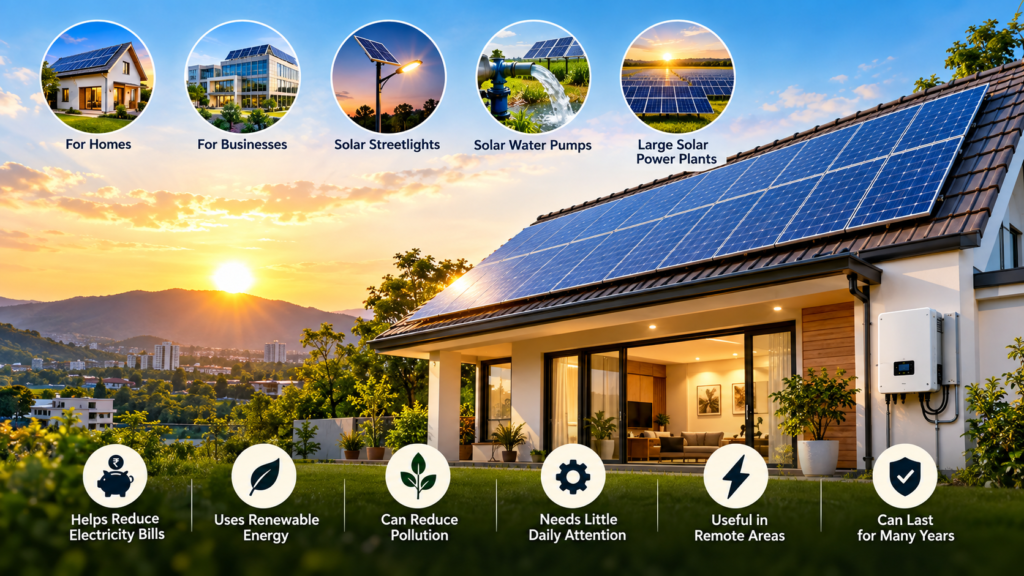
Table of Contents
A solar panel is a flat device that captures sunlight and turns it into electricity. It is made up of many small units called solar cells. Most solar cells are made from silicon, a material that can produce electricity when sunlight falls on it.
You may have seen solar panels on rooftops, streetlights, or large solar farms. They are usually placed where they can receive plenty of sunlight. When sunlight reaches the solar cells, they create direct current (DC) electricity. A device called a solar inverter can then convert this into alternating current (AC) electricity, which is used by most home appliances.
A solar panel is one part of a solar power system. Other parts, such as an inverter, mounting structure, wiring, and sometimes a battery, help the system work safely and supply electricity when needed.
In simple words, a solar panel works like a small power generator that uses sunlight instead of fuel. It does not need petrol, diesel, or coal to produce electricity while operating.
How Does a Solar Panel Work?
A solar panel works by turning sunlight into electrical energy. This process is called the photovoltaic effect. The word may sound difficult, but the idea is simple: when sunlight hits special materials inside a solar cell, it helps tiny particles called electrons move. Their movement creates an electric current.
Here is how a home solar system usually works:
Sunlight reaches the panels: Solar panels are placed on a roof or another open area where sunlight can reach them.
Solar cells produce electricity: The cells inside the panels convert sunlight into direct current (DC) electricity.
The inverter changes the electricity: Most home appliances use alternating current (AC), so a solar inverter converts the DC electricity into AC.
Your home uses the power: The electricity can run appliances such as lights, fans, televisions, and refrigerators.
Extra electricity may be sent to the grid: If your system is connected to the electricity grid and local rules allow it, unused power may be exported to the grid. The way this is measured or credited depends on your electricity provider and applicable regulations.
Solar panels produce electricity during daylight, but their output changes with sunlight, weather, shade, panel direction, and other conditions. At night, panels do not generate electricity. A battery can store some of the electricity produced during the day for use later, if the system includes one.
What Are the Main Types of Solar Panels?
Solar panels come in different types. They use different materials and designs, which can affect how much electricity they produce, how much space they need, and how much they cost. The three common types are monocrystalline, polycrystalline, and thin-film solar panels.
1. Monocrystalline Solar Panels
Monocrystalline solar panels are made from a single crystal structure of silicon. They often look dark black and are known for producing more power from a given area than many other common panel types.
They can be useful when roof space is limited. However, they may cost more than some other options. Their actual performance depends on the panel model and installation conditions.
2. Polycrystalline Solar Panels
Polycrystalline solar panels are made from multiple silicon crystal pieces. They often have a blue, speckled appearance.
These panels can be a practical option when there is enough roof space. Their efficiency is generally lower than that of many monocrystalline panels, so a larger area may be needed to produce a similar amount of electricity.
3. Thin-Film Solar Panels
Thin-film solar panels are made by placing very thin layers of solar material on a surface. They can be lightweight and flexible, depending on their design.
They are used in some buildings and special applications. However, many thin-film panels need more space to produce the same amount of electricity as crystalline silicon panels.
Quick Comparison of Solar Panel Types
| Type | Common appearance | General feature |
|---|---|---|
| Monocrystalline | Dark black | Often produces more power per square metre |
| Polycrystalline | Blue, speckled | May suit installations with more available space |
| Thin-film | Varies by material | Can be lightweight or flexible |
The right solar panel depends on your roof space, electricity needs, budget, and the product’s specifications. Before choosing one, compare the panel’s rated power, efficiency, warranty, and suitability for your location.
What Are the Uses of Solar Panels?
Solar panels can be used in many places, from small homes to large power plants. They provide electricity wherever there is enough sunlight and a suitable system to use the power.
1. Solar Panels for Homes
Homeowners can install solar panels on rooftops to generate electricity for everyday needs. The power can run lights, fans, televisions, refrigerators, and other appliances. A home solar system may also help reduce the amount of electricity bought from the grid.
2. Solar Panels for Businesses
Shops, offices, schools, and factories often use electricity during the day, when solar panels can generate power. Installing solar panels may help these businesses manage their electricity costs, depending on their energy use and system setup.
3. Solar Streetlights
Solar streetlights use panels to charge a battery during the day. The stored energy can then power the light at night. These lights can be useful in streets, parks, pathways, and areas where connecting to the electricity grid is difficult.
4. Solar Water Pumps
Solar panels can supply electricity to water pumps used in farming and other applications. These systems can help pump water in areas where grid electricity is limited, although the right pump and system size depend on the water requirement.
5. Large Solar Power Plants
Large solar farms contain many panels connected together to generate electricity on a bigger scale. The electricity can be supplied to the power grid and used by homes, businesses, and industries.
In short, solar panels are useful for generating electricity in many settings. The best system depends on where it will be installed and how much power is needed.
What Are the Benefits of Installing Solar Panels?
Solar panels allow homes and businesses to generate electricity from sunlight. They can offer several benefits, but the results depend on the system size, sunlight, electricity use, installation quality, and local rules.
1. Helps Reduce Electricity Bills
A solar system can supply some of the electricity your home needs during the day. This may reduce how much power you need to buy from the grid. Your actual savings depend on your electricity use, system output, tariff, and any applicable export or billing rules.
2. Uses a Renewable Energy Source
Sunlight is naturally available and does not run out through everyday use. Solar panels use this renewable source to generate electricity without burning fuel while operating.
3. Can Reduce Pollution
Solar panels do not produce smoke or direct air pollution while generating electricity. However, making, transporting, and disposing of panels also use resources and energy, so solar power is not completely impact-free.
4. Needs Relatively Little Daily Attention
Once installed, a solar system usually needs limited routine care. Keeping panels reasonably clean and arranging periodic checks can help maintain performance. Follow the manufacturer’s guidance for cleaning and maintenance.
5. Can Support Energy Needs in Remote Areas
Solar panels can provide electricity in places where grid access is limited. When paired with suitable batteries and other equipment, they can help supply power when sunlight is unavailable.
6. Can Last for Many Years
Solar panels are designed for long-term use. Their electricity output gradually decreases over time, so it is important to check the product warranty and performance guarantee before buying.
Solar power can be a useful long-term energy option, but it is important to compare the expected system output and total cost with your household’s electricity needs.
What Factors Affect Solar Panel Performance?
Solar panels need sunlight to generate electricity, but they do not produce the same amount of power every day. Several factors can affect how well a solar panel system works.
1. Sunlight and Weather
Bright sunlight usually helps panels produce more electricity. Cloudy weather can reduce their output, though panels may still generate some power. Rain does not stop solar panels from working, but heavy clouds can lower production.
2. Shade
Shade from trees, nearby buildings, or other objects can reduce the electricity produced by a panel. Depending on the system design, shade on even part of a panel may affect its output. Before installation, check whether the roof receives enough sunlight throughout the day.
3. Panel Direction and Tilt
The direction and angle of solar panels affect how much sunlight they receive. The right setup depends on the location, roof design, and any nearby obstacles. An installer can assess the roof and suggest a suitable arrangement.
4. Dust and Dirt
Dust, leaves, and bird droppings can cover the panel surface and block sunlight. Cleaning the panels when needed can help prevent avoidable power loss. Always follow the manufacturer’s cleaning instructions and use safe access methods.
5. Temperature
Solar panels are designed to work in sunlight, but very high temperatures can reduce their electrical efficiency. Good system design and suitable airflow beneath the panels can help manage heat.
6. System Quality and Installation
The panel, inverter, wiring, mounting structure, and installation all affect the system’s performance. Choosing suitable equipment and having it installed correctly can help the system operate safely and reliably.
For these reasons, choosing a solar panel is not only about its rated power. Roof conditions, system design, and regular care also matter.
How to Choose the Right Solar Panel for Your Home
Choosing a solar panel for your home starts with understanding how much electricity your family uses and how much space is available for installation. The right system should meet your needs, fit your budget, and suit your roof.
1. Check Your Electricity Usage
Look at your recent electricity bills to understand how many units of electricity your home uses each month. This helps an installer estimate the solar system size you may need. A larger system is not always necessary if your electricity use is low.
2. Check Your Roof Space
Solar panels need a suitable area with enough sunlight. The installer should check the roof’s size, direction, strength, and shade from nearby trees or buildings. These details help determine how many panels can fit and how much electricity they may produce.
3. Compare Panel Types and Specifications
Compare monocrystalline, polycrystalline, and other available panel options. Check the rated power, efficiency, product warranty, and performance warranty. Do not choose a panel based only on its appearance or advertised power.
4. Choose the Right System Type
Home solar systems commonly include:
- On-grid system: Connected to the electricity grid. It may allow excess electricity to be exported, subject to local rules.
- Off-grid system: Works independently of the grid and usually needs batteries to provide power when sunlight is unavailable.
- Hybrid system: Combines a grid connection with battery storage, where supported by the equipment and local rules.
5. Compare the Total Cost
Ask for a written quotation that lists the panels, inverter, mounting structure, wiring, installation, and any battery or other equipment. Also check whether applicable subsidies or other benefits are included and whether you meet their requirements.
6. Check the Installer and Warranty
Choose an installer who can explain the system design, safety measures, maintenance needs, and warranty terms. Ask who will handle service if a panel or inverter develops a problem.
Before making a decision, compare the expected electricity generation with your household usage. This gives you a clearer idea of whether the proposed solar system is suitable for your home.
What Is the Solar Panel Price in India?
The solar panel price in India depends on the panel type, power rating, brand, and quality. The total cost of a home solar system also includes equipment such as the inverter, mounting structure, wiring, and installation.
This means the price of one solar panel is different from the cost of installing a complete solar system. A quotation should clearly show what is included so you can compare options fairly.
Factors That Affect Solar Panel Price
- Panel type: Different technologies and models have different prices.
- Power rating: Higher-wattage panels may produce more electricity per panel, but the total system cost depends on the full design.
- Brand and warranty: Product quality, service support, and warranty terms can affect the price.
- System size: A larger system generally needs more panels and may require a different inverter and mounting setup.
- Installation conditions: Roof type, height, wiring distance, and other site requirements can change installation costs.
- Battery storage: Adding batteries can increase the overall system cost.
Solar Panel Rate vs. Solar System Cost
The solar panel rate usually refers to the price of the panel itself. The solar system cost refers to the price of the complete setup needed to generate and use solar electricity.
When requesting a quotation, ask for a clear breakdown of equipment, installation, taxes, warranty, and any applicable subsidy. Prices and subsidy rules can change, so confirm the latest details before making a purchase.
What Is the Solar Panel Installation Cost?
The solar panel installation cost is the amount you pay to set up a solar power system at your home. It includes more than just the panels. The final cost depends on the system size, equipment, roof condition, and work needed at the site.
What Is Included in the Installation Cost?
A home solar installation quotation may include:
- Solar panels: The panels that convert sunlight into electricity.
- Solar inverter: The equipment that changes DC electricity from the panels into AC electricity for home use.
- Mounting structure: The frame that holds the panels securely in place.
- Wiring and safety equipment: Cables, switches, protection devices, and other required parts.
- Installation work: Labour, setup, testing, and commissioning.
- Battery, if required: A battery stores electricity for use later and adds to the total cost.
How Can You Understand the Cost?
Start by checking your electricity usage and asking an installer to assess your roof. Then request a detailed quotation for a system designed around your needs. Compare the equipment, warranties, installation work, and expected electricity generation—not just the final price.
Also ask whether any government subsidy applies to your system and whether the installer will help with the required process. Eligibility and benefits depend on current rules, so confirm them through official sources before relying on a subsidy in your budget.
A clear quotation helps you understand what you are paying for and avoid unexpected costs during installation.
How Is a Solar Panel Installed?
Solar panel installation involves checking your home, planning the system, fixing the equipment, and testing it before use. A trained installer should handle the electrical work and follow the applicable safety standards.
Step 1: Site Inspection
The installer checks your roof space, sunlight, shade, roof condition, and electricity usage. This helps determine whether your home is suitable for solar and what system size may be needed.
Step 2: System Design and Quotation
Based on the inspection, the installer prepares a system design and quotation. It should explain the panels, inverter, mounting structure, wiring, estimated generation, warranty, and total cost.
Step 3: Approvals and Paperwork
For a grid-connected system, permissions or applications may be required from the local electricity distribution company. The process depends on the system and the rules in your area.
Step 4: Mounting the Panels
The installation team fixes a mounting structure to the roof and attaches the solar panels securely. The panels are positioned to receive suitable sunlight while taking the roof layout into account.
Step 5: Electrical Connections
The installer connects the panels to the inverter and the rest of the system using suitable cables and safety equipment. If the system includes a battery, it is connected according to the manufacturer’s instructions.
Step 6: Testing and Commissioning
The system is checked to make sure the equipment and electrical connections work correctly. For a grid-connected system, it may need inspection or approval before it can export electricity to the grid.
After installation, ask for the system documents, warranty details, operating instructions, and maintenance guidance. Keep these in a safe place for future reference.
How to Maintain Solar Panels
Solar panels usually need limited daily care, but regular checks can help them produce electricity properly for many years. Dust, leaves, bird droppings, and other dirt can cover the panel surface and reduce the sunlight reaching the solar cells.
1. Keep Panels Clean
Check the panels for visible dirt and clean them when needed, following the manufacturer’s instructions. Use suitable cleaning methods and avoid harsh chemicals or rough tools that could damage the surface.
2. Check for Shade
Trees and nearby structures can create new shade as time passes. If branches begin covering your panels, consider having them safely trimmed by a qualified person.
3. Watch Your System’s Output
Many inverters or monitoring apps show how much electricity your solar system generates. Check the readings regularly so you can notice unusual changes and contact your installer if needed.
4. Arrange Professional Inspections
Ask your installer how often the system should be inspected. A qualified professional can check the wiring, inverter, mounting structure, and safety equipment.
5. Follow Safety Instructions
Do not climb onto a roof or touch electrical parts to clean or repair the system yourself. Solar equipment can carry electrical risks, even when the system is not supplying power to your home.
Good maintenance helps you spot problems early and keep your solar system working as intended.