



Benefits of Installing Solar Panels for Home: Complete Guide for Homeowners
Electricity bills are rising every year, making many homeowners look for smarter ways to save money. One of the best long-term solutions is installing a home solar system. Solar panels convert sunlight into electricity, helping you power your home while reducing your dependence on the electricity grid. Besides lowering monthly electricity bills, solar energy is a clean, renewable source that supports a more sustainable future.
The benefits of installing solar panels for home include long-term savings, increased property value, lower carbon emissions, and greater energy independence. Many homeowners can also benefit from government support, such as PM Surya Ghar Yojana, if they meet the eligibility requirements. However, the actual savings and performance depend on factors like your roof space, sunlight availability, electricity usage, and the quality of the installation. In this guide, you’ll learn the key benefits of residential solar, understand how it works, and discover whether rooftop solar is the right choice for your home.
Benefits of Installing Solar Panels for Home
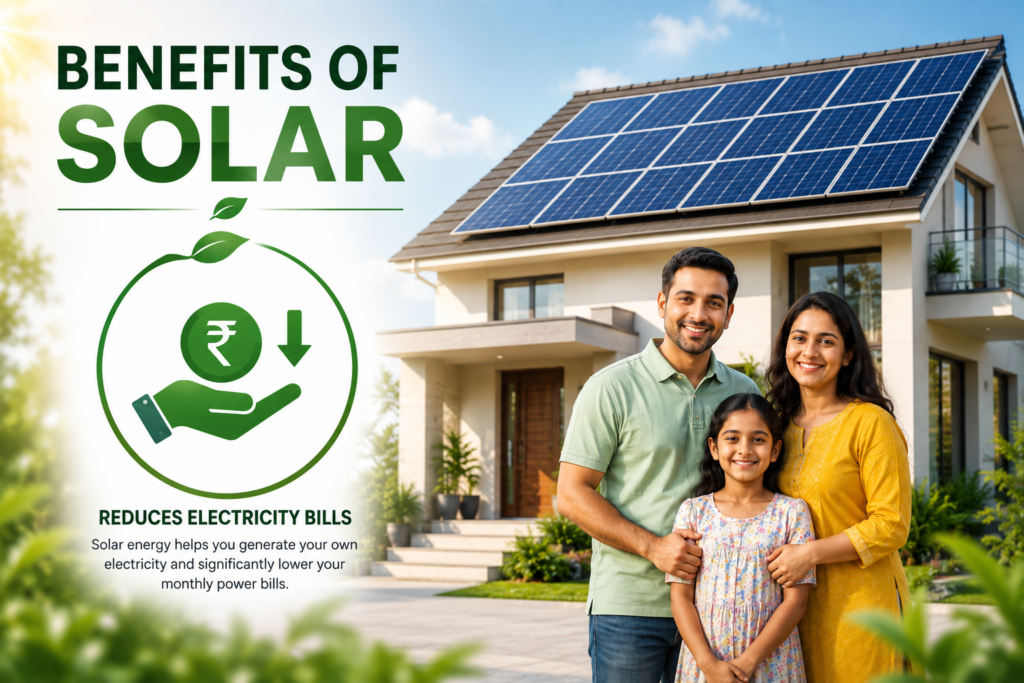
Table of Contents
Why More Homeowners Are Switching to Solar
More homeowners are choosing solar panels for their homes because they want to save money and have better control over their electricity costs. As electricity prices continue to increase, a residential solar system helps generate clean electricity from sunlight, reducing the amount of power you need to buy from the grid. This can lead to lower monthly electricity bills over the life of the system.
Another reason for the growing demand is the increasing awareness of renewable energy and its environmental benefits. Unlike electricity generated from fossil fuels, solar energy produces clean power without creating harmful emissions during operation. By installing rooftop solar panels, homeowners can reduce their carbon footprint while contributing to a cleaner environment.
Government initiatives have also encouraged more families to adopt solar energy. Programs such as PM Surya Ghar Yojana provide financial support for eligible residential consumers, making home solar installation more affordable. Before applying, homeowners should always check the latest eligibility criteria and official government guidelines.
Modern solar panels, solar inverters, and related technologies are more efficient, reliable, and durable than ever before. Most quality solar panels are designed to perform for 25 years or more with proper maintenance, making them a long-term investment for many households.
In addition, many homeowners value the peace of mind that comes with producing their own electricity. While a grid-connected solar system may still rely on the utility network at certain times, generating your own power can reduce your dependence on rising electricity tariffs and improve your home’s overall energy efficiency. Before installing a system, it is recommended to have a professional site assessment to determine the right system size based on your electricity consumption, roof space, and local weather conditions.
Top Benefits of Installing Solar Panels for Home
Installing a home solar system offers more than just lower electricity bills. It is a long-term investment that can help you save money, increase your home’s value, and support a cleaner environment. While the exact benefits depend on your location, electricity usage, roof condition, and system size, most homeowners can enjoy several important advantages after switching to rooftop solar.
Lower Electricity Bills
One of the biggest benefits of installing solar panels for home is reducing your monthly electricity bill. Solar panels generate electricity from sunlight during the day, allowing you to use less power from the grid. If your system is properly designed based on your energy needs, it can significantly reduce your electricity costs over time. Homes with higher daytime electricity usage often see greater savings.
Long-Term Cost Savings
Although installing a residential solar system requires an initial investment, it can provide savings for many years. Quality solar panels are designed to last 25 years or more with proper maintenance. Over their lifetime, the savings on electricity bills can help recover the installation cost, making solar a cost-effective solution for many homeowners.
Increased Property Value
A well-installed rooftop solar system can make your home more attractive to future buyers. Many homebuyers appreciate properties with lower running costs and energy-efficient features. While the impact on property value varies depending on the local real estate market, solar panels are often seen as a valuable long-term improvement.
Clean and Renewable Energy
Solar energy is a renewable source of power that uses sunlight to generate electricity. Unlike electricity produced from fossil fuels, solar power generates clean energy during operation and helps reduce greenhouse gas emissions. Choosing solar panels for your home is a practical step toward a more sustainable lifestyle.
Protection from Rising Electricity Prices
Electricity tariffs can increase over time, leading to higher monthly expenses. By generating your own electricity with a home solar system, you reduce your dependence on the grid. This helps protect you from future increases in electricity prices and gives you greater control over your energy costs.
Low Maintenance Requirements
Modern solar panels require very little maintenance. In most cases, regular cleaning to remove dust, leaves, or bird droppings and occasional professional inspections are enough to keep the system working efficiently. Following the manufacturer’s maintenance guidelines can help maximize system performance and lifespan.
Government Subsidies for Eligible Homeowners
The Government of India offers support for residential rooftop solar through programs such as PM Surya Ghar Yojana for eligible households. These incentives can reduce the overall installation cost and make solar more affordable. Since subsidy policies and eligibility requirements may change, always refer to the latest official government guidelines before making a decision.
Greater Energy Independence
Generating electricity from your own rooftop solar system means you rely less on the electricity grid. While most grid-connected systems still use the grid when solar production is low, producing your own power provides greater energy security and helps reduce your dependence on conventional electricity sources.
How Much Can You Save with Home Solar?
The amount you can save with a home solar system depends on several factors, including your monthly electricity consumption, the size of the solar system, your location, roof orientation, local weather conditions, and your electricity tariff. A properly designed residential solar system can reduce a large portion of your electricity bill by generating clean energy from sunlight during the day.
Homeowners who use more electricity during daylight hours often achieve greater savings because they consume more of the solar power they generate. If your local electricity provider offers net metering, you may also receive credits for excess electricity exported to the grid, subject to applicable regulations and utility policies.
While every home is different, the table below provides a general estimate to help you understand the relationship between your monthly electricity bill and the recommended solar system size. These figures are for reference only and should not be considered a guaranteed outcome.
| Average Monthly Electricity Bill | Recommended Solar System* | Potential Savings** |
|---|
| ₹2,000–₹4,000 | 2 kW | Moderate |
| ₹4,000–₹7,000 | 3 kW | High |
| ₹7,000–₹10,000 | 5 kW | Very High |
| Above ₹10,000 | 6–10 kW | Maximum |
* The recommended system size is an estimate. The right size depends on your monthly electricity usage (kWh), available roof space, and site conditions.
** Actual savings vary based on electricity consumption, system performance, local tariffs, weather, maintenance, and net metering policies.
To get the best results, it is important to choose the correct solar panel system for your home instead of selecting a system based only on your electricity bill. A professional site survey can assess your roof, energy usage, shading, and future electricity needs to recommend the most suitable solution.
If you’re considering installing solar panels for your home, requesting a personalized solar assessment is the best way to estimate your expected savings, system size, and return on investment based on your specific requirements.
Is Solar Worth It for Every Home?
Solar panels are a great investment for many homeowners, but they are not the perfect solution for every house. Before installing a home solar system, it is important to understand whether your home is suitable for rooftop solar. A professional site assessment can help determine the right system size and expected performance.
Roof Space and Condition
The condition and size of your roof play an important role in solar panel installation. Your roof should have enough space to install the required number of solar panels without heavy shading from nearby buildings, trees, or other obstacles. A strong and well-maintained roof can also help ensure the system performs safely for many years.
Sunlight Availability
Solar panels produce the most electricity when they receive direct sunlight. Homes located in areas with good sunlight throughout the year generally generate more solar power. However, modern solar panels can still produce electricity on cloudy days, although their output will be lower than on bright sunny days.
Your Electricity Consumption
A residential solar system should be designed based on your actual electricity usage. Homes with higher electricity consumption usually benefit more from installing solar because they can replace a larger portion of the electricity purchased from the grid. Reviewing your electricity bills from the past 12 months can help estimate the right system size.
Budget and Available Incentives
The cost of installing solar varies depending on the system size, equipment quality, and installation requirements. Eligible homeowners may reduce the overall cost through government programs such as PM Surya Ghar Yojana, subject to the latest rules and eligibility criteria. It is also worth exploring financing options if available in your area.
Future Energy Needs
Think about how your electricity usage may change over the next few years. If you plan to buy an electric vehicle, install additional air conditioners, or expand your home, your future energy demand may increase. Planning ahead allows you to choose a solar system that better meets your long-term needs.
Roof Space and Condition
Think about how your electricity usage may change over the next few years. If you plan to buy an electric vehicle, install additional air conditioners, or expand your home, your future energy demand may increase. Planning ahead allows you to choose a solar system that better meets your long-term needs.
Sunlight Availability
Solar panels produce the most electricity when they receive direct sunlight. Homes located in areas with good sunlight throughout the year generally generate more solar power. However, modern solar panels can still produce electricity on cloudy days, although their output will be lower than on bright sunny days.
Your Electricity Consumption
A residential solar system should be designed based on your actual electricity usage. Homes with higher electricity consumption usually benefit more from installing solar because they can replace a larger portion of the electricity purchased from the grid. Reviewing your electricity bills from the past 12 months can help estimate the right system size.
Budget and Available Incentives
The cost of installing solar varies depending on the system size, equipment quality, and installation requirements. Eligible homeowners may reduce the overall cost through government programs such as PM Surya Ghar Yojana, subject to the latest rules and eligibility criteria. It is also worth exploring financing options if available in your area.
Future Energy Needs
Think about how your electricity usage may change over the next few years. If you plan to buy an electric vehicle, install additional air conditioners, or expand your home, your future energy demand may increase. Planning ahead allows you to choose a solar system that better meets your long-term needs.
Get a Professional Solar Assessment
Every home is different. Factors such as roof direction, shading, local weather, electricity tariff, and energy consumption all affect solar performance. Instead of choosing a system based only on price, request a professional solar assessment. An experienced installer can recommend the right solar power system for your home, estimate your potential savings, and explain the expected return on investment based on your specific situation.
Common Myths About Home Solar Panels
Many people are interested in installing solar panels for their home, but some common myths can make them unsure about the decision. Understanding the facts can help you make an informed choice based on reliable information rather than misconceptions.
Myth 1: Solar Panels Don't Work on Cloudy Days
Fact: Solar panels generate electricity from sunlight, not heat. They continue to produce power on cloudy or rainy days, although the electricity generated is usually lower than on bright sunny days. Modern solar panels are designed to perform efficiently in different weather conditions.
Fact: A residential solar system requires very little maintenance. In most cases, cleaning the panels periodically to remove dust, leaves, or bird droppings and scheduling occasional professional inspections are enough to keep the system operating efficiently. Following the manufacturer’s maintenance recommendations helps maximize performance and lifespan.
Myth 3: Solar Is Too Expensive
Fact: While there is an initial installation cost, home solar systems can provide long-term savings by reducing electricity bills. Eligible homeowners may also benefit from government programs such as PM Surya Ghar Yojana, which can help lower the upfront cost. Financing options may also be available through some installers or financial institutions.
Myth 4: Solar Panels Damage the Roof
Fact: When installed by qualified professionals, rooftop solar panels are designed to be securely mounted without damaging your roof. In fact, solar panels can help protect the covered portion of the roof from direct sunlight, rain, and other weather conditions. Before installation, a professional installer should inspect the roof to ensure it is suitable for supporting the system.
Myth 5: Homes with Solar Have No Electricity During Power Cuts
Fact: Most standard grid-connected solar systems automatically shut down during a power outage for safety reasons, unless they are installed with a compatible battery backup or hybrid inverter system. If uninterrupted power is important for your home, discuss backup options with your solar installer before installation.
Myth 6: Bigger Solar Systems Are Always Better
Fact: The best solar power system for your home is one that matches your electricity consumption, available roof space, and future energy needs. Installing a larger system than necessary may not always provide additional financial benefits. A professional energy assessment helps determine the right system size for your home.
By separating facts from myths, homeowners can make better decisions about installing solar panels for home. Always consult an experienced solar installer, review product warranties, and understand local regulations before making your investment.
Tips Before Installing Solar Panels
Installing a home solar system is a long-term investment, so taking the time to plan properly can help you get the best performance and value. Before making a decision, consider the following tips to ensure your solar panel installation meets your energy needs.
Choose a Trusted Solar Installer
The quality of the installation is just as important as the quality of the solar panels. Look for an experienced installer with a proven track record, certified professionals, and positive customer reviews. Ask about previous projects, installation standards, and after-sales support before signing a contract.
Select the Right System Size
Every home has different electricity needs. A system that is too small may not generate enough electricity, while an oversized system may not provide the best return on investment. A professional energy assessment based on your electricity bills, roof space, and future energy needs can help determine the right residential solar system for your home.
Use High-Quality Components
A solar power system consists of several important components, including solar panels, a solar inverter, mounting structures, cables, and safety equipment. Choosing quality products from reputable manufacturers can improve system performance, reliability, and long-term durability. Always compare product warranties before making your final decision.
Check Your Roof Condition
Your roof should be in good condition before installing rooftop solar panels. If major repairs or roof replacement are expected in the near future, it is usually better to complete those repairs before the solar installation. Also, ensure the roof has enough unshaded space to achieve the desired energy generation.
Understand Net Metering and Local Regulations
If net metering is available in your area, it can help you receive credits for excess electricity exported to the grid, subject to your local electricity provider’s policies. Before installation, ask your installer to explain the applicable regulations, approval process, and any documentation required.
Review Warranties and Maintenance Support
Before purchasing a home solar system, carefully review the warranties for solar panels, inverters, and workmanship. Also, ask what maintenance services are included after installation and how technical support will be provided if you need assistance in the future.
Request a Detailed Solar Proposal
A reliable installer should provide a detailed proposal that clearly explains the recommended system size, estimated annual energy generation, equipment specifications, expected savings, warranty details, installation timeline, and total project cost. Reviewing this information carefully will help you compare different offers and make an informed decision.
By following these tips, you can choose a solar power system for your home that delivers reliable performance, long-term savings, and peace of mind. Taking the time to compare options and work with an experienced installer can help you maximize the benefits of your investment.
Conclusion
Installing solar panels for your home is more than just a way to reduce electricity bills—it’s a long-term investment in your home’s future. A well-designed residential solar system can help you generate clean energy, lower your monthly electricity costs, increase your property’s value, and reduce your dependence on the electricity grid. With modern solar technology, low maintenance requirements, and government support for eligible homeowners, rooftop solar has become a practical choice for many families.
However, every home is different. Your roof size, sunlight availability, electricity consumption, and local regulations all play an important role in determining the right solar solution. That’s why it’s important to choose a reliable solar installer and get a professional site assessment before making a decision.
If you’re planning to switch to solar, start by understanding your energy needs and exploring the best system for your home. A personalized solar assessment can help you estimate the right system size, expected energy generation, potential savings, and available government benefits based on your eligibility.
Ready to make the switch? Contact Natural Power for a free solar consultation and expert guidance. Our team can help you choose the right home solar system based on your electricity usage, roof condition, and long-term energy goals, so you can make a confident and informed investment in clean energy.
READY TO GO SOLAR?
Frequently Asked Questions
What are the benefits of installing solar panels for home?
How much can I save with a home solar system?
How long do solar panels last?
Do solar panels work during cloudy or rainy days?
Do solar panels require regular maintenance?
Can I use solar power during a power outage?
Is my home suitable for solar panel installation?
Can I get a government subsidy for home solar
How do I choose the right solar system size?
Is installing solar panels worth it?
PM Surya Ghar Subsidy for Home Solar: Eligibility, Benefits, Subsidy Amount & Application
- July 27, 2026
Types of Home Solar Systems: Complete Guide to Choosing the Right Solar System
- July 31, 2026