

Types of Home Solar Systems: Complete Guide to Choosing the Right Solar System
The three main types of home solar systems are on-grid, off-grid, and hybrid solar systems. Each type is designed for different energy needs, budgets, and electricity usage. An on-grid solar system is ideal for homes with a reliable electricity supply and offers the highest savings through net metering. An off-grid solar system works independently of the electricity grid and uses batteries to store power, making it suitable for remote areas. A hybrid solar system combines the benefits of both by using the grid and battery backup, ensuring power is available even during outages.
Choosing the right solar power system for your home depends on your monthly electricity consumption, roof space, local power supply, budget, and backup power requirements. In this guide, you’ll learn how each residential solar system works, its advantages and disadvantages, and how to choose the best option for your home while maximizing long-term savings and energy efficiency.
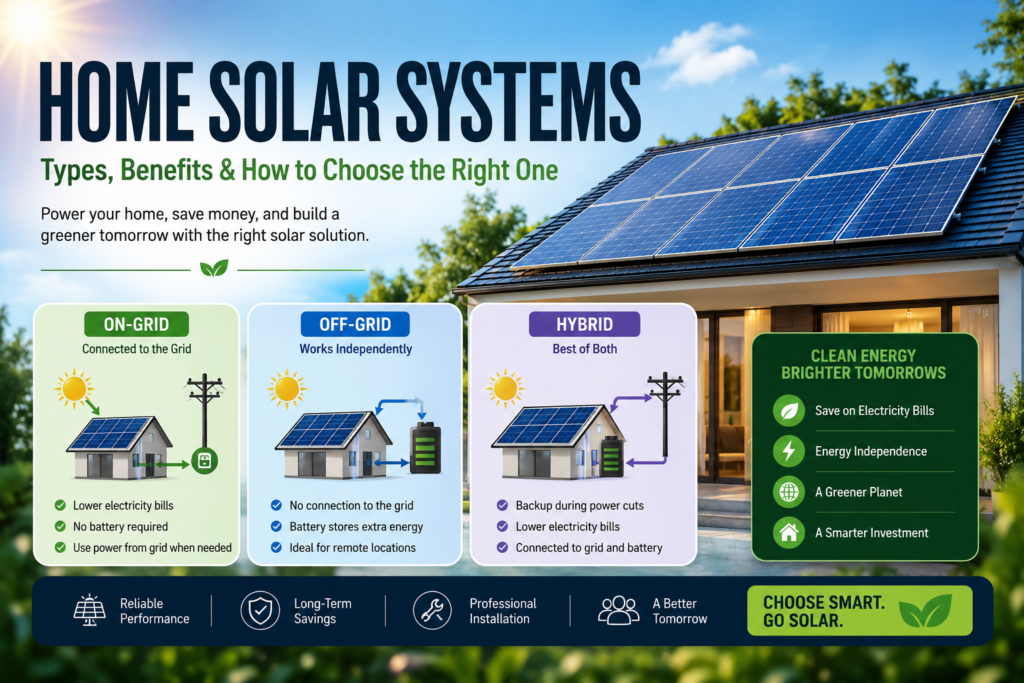
Table of Contents
What Are the Different Types of Home Solar Systems?
There are three main types of home solar systems: on-grid, off-grid, and hybrid solar systems. Each system is designed to meet different electricity needs and works best in specific situations. The right choice depends on factors such as your monthly electricity consumption, budget, location, availability of grid power, and whether you need backup electricity during power outages.
Here’s a quick overview of each type:
1. On-Grid Solar System
An on-grid solar system, also known as a grid-connected solar system, is connected to the local electricity grid. It generates electricity during the day to power your home, and any excess electricity can be exported to the grid through net metering, where applicable. Since it does not require battery storage, it is usually the most affordable and widely installed solar system for homes.
Best for: Homes with a reliable electricity supply and homeowners looking to reduce electricity bills.
2. Off-Grid Solar System
An off-grid solar system operates independently without relying on the electricity grid. It uses solar batteries to store excess electricity generated during the day so it can be used at night or during cloudy weather. This system is commonly used in remote locations where grid electricity is unavailable or unreliable.
Best for: Homes in remote areas with limited or no access to the electricity grid.
3. Hybrid Solar System
A hybrid solar system combines the features of both on-grid and off-grid systems. It is connected to the electricity grid while also using battery storage to store excess solar energy. During a power outage, the battery can supply electricity to selected appliances, providing greater energy security.
Best for: Homeowners who want lower electricity bills along with backup power during power cuts.
Quick Comparison of Home Solar Systems
| Solar System | Connected to Grid | Battery Required | Backup During Power Outage | Best For |
|---|---|---|---|---|
| On-Grid | Yes | No | No | Maximum electricity bill savings |
| Off-Grid | No | Yes | Yes | Remote locations without grid power |
| Hybrid | Yes | Yes | Yes | Homes needing both savings and backup power |
Each type of home solar system has its own advantages and limitations. In the following sections, we’ll explain how on-grid, off-grid, and hybrid solar systems work, along with their benefits, drawbacks, and the type of home each system is best suited for.
On-Grid Solar System
An on-grid solar system is the most common type of home solar system. It is connected to the local electricity grid and does not require a battery to operate. During the day, solar panels generate electricity to power your home. If your system produces more electricity than you use, the excess power can be exported to the grid through net metering, where available. When solar production is low, such as at night, your home automatically uses electricity from the grid.
Because it does not include battery storage, an on-grid solar system usually has a lower installation cost than other types of solar systems. It is an ideal choice for homeowners who want to reduce their electricity bills and have a reliable grid connection.
How Does an On-Grid Solar System Work?
The working process is simple:
- Solar panels capture sunlight and generate DC electricity.
- A solar inverter converts DC electricity into AC electricity for household use.
- Your home uses the solar electricity to power appliances.
- Any extra electricity can be exported to the electricity grid through net metering, subject to local regulations.
- When solar power is not available, your home automatically draws electricity from the grid.
Advantages of an On-Grid Solar System
- Lower electricity bills by generating your own solar power.
- Lower installation cost because no battery is required.
- Simple design with fewer components.
- Low maintenance requirements.
- Opportunity to benefit from net metering, where available.
- Suitable for most urban and suburban homes with a stable electricity supply.
- Quality systems can operate efficiently for 25 years or more with proper maintenance.
Disadvantages of an On-Grid Solar System
- Does not provide backup power during most grid power outages.
- Depends on the electricity grid when solar generation is unavailable, such as at night.
- Performance and savings depend on your electricity consumption, sunlight availability, and local net metering policie
An on-grid solar system is best for:
- Homeowners with a reliable electricity connection.
- Families looking to reduce monthly electricity bills.
- Homes that consume most of their electricity during the daytime.
- People who want an affordable solar solution with a faster return on investment.
- Homeowners who do not require battery backup during power outages.
Off-Grid Solar System
An off-grid solar system is a type of home solar system that works without being connected to the electricity grid. It generates electricity from solar panels and stores the extra energy in solar batteries for use at night or during cloudy weather. Since it operates independently, it is an excellent choice for homes in remote areas where grid electricity is unavailable or unreliable.
Unlike an on-grid system, an off-grid system requires a battery bank to ensure a continuous power supply. Because of the additional batteries and equipment, the installation cost is usually higher. However, it provides complete energy independence, making it suitable for locations with frequent or long power outages
How Does an Off-Grid Solar System Work?
An off-grid solar system follows these simple steps:
- Solar panels capture sunlight and generate DC electricity.
- A solar charge controller regulates the electricity before charging the batteries.
- The solar batteries store excess energy for later use.
- A solar inverter converts the stored DC electricity into AC electricity to power your home.
- Your appliances use electricity from the solar panels during the day and from the batteries when solar generation is low.
Advantages of an Off-Grid Solar System
- Works completely independent of the electricity grid.
- Provides electricity even in remote locations without grid access.
- Offers backup power during power outages.
- Helps achieve greater energy independence.
- Can power essential household appliances throughout the day and night when properly designed.
- Suitable for farms, rural homes, cabins, and remote properties.
Disadvantages of an Off-Grid Solar System
- Higher installation cost due to battery storage.
- Batteries require periodic maintenance and may need replacement after several years, depending on the battery type and usage.
- System sizing must be carefully planned to ensure enough power is available during periods of low sunlight.
- Expanding the system later may require additional batteries and equipment.
An off-grid solar system is best for:
- Homes located in remote areas without access to the electricity grid.
- Rural properties, farmhouses, and holiday homes.
- Areas with frequent and extended power outages.
- Homeowners who want complete independence from the electricity grid.
- People who are willing to invest in battery storage for reliable backup power.
Hybrid Solar System
A hybrid solar system combines the features of both on-grid and off-grid solar systems. It is connected to the electricity grid while also using solar batteries to store extra electricity. This allows your home to use solar power during the day, store unused energy for later, and automatically switch to battery power during a power outage.
A hybrid solar system is a popular choice for homeowners who want to reduce electricity bills without worrying about power cuts. Although it costs more than an on-grid system because of the battery storage, it offers greater flexibility, energy security, and backup power.
How Does a Hybrid Solar System Work?
A hybrid solar system works in the following steps:
- Solar panels capture sunlight and generate DC electricity.
- A hybrid solar inverter converts DC electricity into AC electricity for household use.
- Your home uses the solar electricity to power appliances.
- Any extra electricity first charges the solar battery.
- Once the battery is fully charged, additional electricity may be exported to the grid through net metering, where available.
- During the night or a power outage, the battery supplies electricity to your home before drawing power from the grid.
Advantages of a Hybrid Solar System
- Provides backup power during electricity outages.
- Reduces monthly electricity bills by maximizing the use of solar energy.
- Stores excess solar energy for use at night or during cloudy weather.
- Offers greater energy independence compared to an on-grid system.
- Can work with the electricity grid while also using battery storage.
- Helps make better use of the electricity generated by your solar panels.
Disadvantages of a Hybrid Solar System
- Higher installation cost than an on-grid solar system.
- Batteries increase the overall system cost and may need replacement after several years, depending on the battery type and usage.
- Installation is more complex because it includes additional components such as battery storage and a hybrid inverter.
- Regular monitoring of the battery system is recommended to maintain optimal performance.
A hybrid solar system is best for:
- Homes that experience frequent power outages.
- Homeowners who want both electricity bill savings and backup power.
- Families using important appliances such as refrigerators, Wi-Fi routers, medical equipment, or home office devices during power cuts.
- Homes with moderate to high electricity consumption.
- People looking for greater energy independence while remaining connected to the electricity grid.
On-Grid vs Off-Grid vs Hybrid Solar System
Choosing the right type of home solar system depends on your electricity needs, budget, and whether you need backup power during outages. While all three systems use solar panels to generate electricity, they work differently and are designed for different situations.
The table below compares the on-grid, off-grid, and hybrid solar systems to help you understand which one best suits your home.
| Feature | On-Grid Solar System | Off-Grid Solar System | Hybrid Solar System |
|---|---|---|---|
| Grid Connection | Connected to the electricity grid | Not connected to the electricity grid | Connected to the electricity grid |
| Battery Storage | Not required | Required | Required |
| Power During Outages | No (in most standard systems) | Yes | Yes |
| Electricity Bills | Helps reduce electricity bills | No electricity bill if completely off-grid | Helps reduce electricity bills |
| Net Metering | Available where permitted | Not applicable | Available where permitted |
| Installation Cost | Lowest | Highest | Higher than on-grid |
| Maintenance | Low | Moderate | Moderate |
| Energy Independence | Medium | High | High |
| Best For | Homes with a reliable electricity supply | Remote homes without grid access | Homes needing both savings and backup power |
Which Solar System Should You Choose?
The best solar power system for your home depends on your individual needs.
- Choose an On-Grid Solar System if your area has a reliable electricity supply and your main goal is to reduce monthly electricity bills at the lowest installation cost.
- Choose an Off-Grid Solar System if your home is located in a remote area where grid electricity is unavailable or unreliable, and you need complete energy independence.
- Choose a Hybrid Solar System if you want to save on electricity bills while also having backup power during power outages. It is a good option for areas that experience frequent power cuts.
There is no single best home solar system for everyone. The right choice depends on factors such as your electricity consumption, roof space, budget, local electricity supply, and backup power requirements. A professional solar assessment can help you select the most suitable system for your home’s current and future energy needs.
Which Type of Solar System Is Best for Your Home?
There is no single best home solar system for everyone. The right choice depends on your electricity usage, budget, location, and whether you need backup power during outages. Before investing in a residential solar system, it’s important to understand your home’s energy requirements and future needs.
Here are the key factors to consider when choosing the best solar power system for your home.
Monthly Electricity Consumption
Start by reviewing your electricity bills from the last 6 to 12 months. Your average monthly electricity consumption helps determine the right system size. Homes with higher electricity usage generally require a larger solar panel system to maximize savings.
Availability of Grid Electricity
If your area has a stable electricity supply, an on-grid solar system is often the most cost-effective option. However, if you experience frequent power outages or live in a remote location, a hybrid or off-grid solar system may be a better choice.
Do You Need Backup Power?
Think about how important electricity is during a power cut. If you need to keep appliances such as refrigerators, Wi-Fi routers, lights, security systems, or medical equipment running, a hybrid or off-grid solar system with battery storage can provide backup power. If backup power is not a priority, an on-grid system is usually sufficient.
Available Roof Space
The amount of usable roof space affects how many solar panels can be installed. A larger roof can accommodate a bigger system, while shading from nearby buildings or trees may reduce electricity generation. A professional site survey can identify the best panel placement for maximum sunlight.
Budget
Your budget is another important factor.
- On-grid solar systems generally have the lowest installation cost.
- Off-grid solar systems are usually the most expensive because they require battery storage.
- Hybrid solar systems offer both savings and backup power but involve a higher upfront investment than on-grid systems.
Choosing the right system should balance your budget with your long-term energy goals.
Future Energy Needs
Consider whether your electricity consumption is likely to increase in the future. If you plan to install air conditioners, buy an electric vehicle, or expand your home, your energy demand may grow. Planning for future usage can help you avoid upgrading your solar system later.
Government Incentives
Eligible homeowners may benefit from government programs such as PM Surya Ghar Yojana, which can help reduce the cost of installing a residential rooftop solar system. Since subsidy schemes and eligibility requirements may change, always check the latest official guidelines before applying.
Expert Recommendation
If your primary goal is to reduce electricity bills, an on-grid solar system is usually the most economical choice.
If you need reliable backup power during outages, a hybrid solar system is often the better option.
If your home is not connected to the electricity grid, an off-grid solar system is the ideal solution.
The best way to choose the right home solar system is to schedule a professional solar assessment. An experienced installer can evaluate your roof, electricity consumption, local conditions, and future energy needs to recommend the most suitable system for your home.
Common Mistakes to Avoid When Choosing a Home Solar System
Installing a home solar system is a long-term investment, so avoiding common mistakes can help you save money and get better performance. Many homeowners focus only on the installation cost, but other factors such as system size, product quality, and installation experience are equally important.
Choosing a Solar System Based Only on Price
A lower price may seem attractive, but it should not be the only factor in your decision. Low-cost systems may use lower-quality components or offer limited after-sales support. Instead, compare the quality of solar panels, inverters, warranties, and the installer’s experience to get the best long-term value.
Installing the Wrong System Size
A system that is too small may not generate enough electricity, while an oversized system may not provide the best return on investment. Your residential solar system should be designed based on your monthly electricity consumption, available roof space, and future energy needs.
Ignoring Roof Condition and Shading
The performance of a solar power system for home depends on how much sunlight the panels receive. Roof damage, poor orientation, or shading from nearby trees and buildings can reduce electricity generation. Always request a professional site survey before installation.
Not Understanding the Different Types of Solar Systems
Some homeowners choose an on-grid, off-grid, or hybrid solar system without fully understanding how each one works. For example, a standard on-grid solar system usually does not provide backup power during a power outage. Choosing the right system based on your electricity needs is essential.
Overlooking Warranties and After-Sales Support
A solar system is expected to operate for many years. Before making a purchase, check the warranties for solar panels, inverters, batteries (if applicable), and installation workmanship. Also, choose a company that provides reliable maintenance and customer support after installation.
Choosing an Inexperienced Installer
Even the best solar equipment may not perform well if it is installed incorrectly. Work with a trusted and experienced solar EPC company that follows industry standards, uses quality components, and provides professional installation and after-sales service.
Not Checking Government Schemes and Net Metering
If you are planning to install an on-grid or hybrid solar system, check the latest net metering policies and available government programs, such as PM Surya Ghar Yojana, if you are eligible. Understanding these programs before installation can help you make an informed decision and reduce your overall investment.
Frequently Asked Questions
What are the different types of home solar systems?
Which type of solar system is best for home use?
Choose an on-grid solar system if you have a reliable electricity supply and want to reduce your electricity bills.
Choose a hybrid solar system if you need backup power during outages.
Choose an off-grid solar system if your home is not connected to the electricity grid.
What is the difference between on-grid, off-grid, and hybrid solar systems?
On-grid: Connected to the grid, no battery required.
Off-grid: Not connected to the grid and requires battery storage.
Hybrid: Connected to the grid and includes battery backup.
Do I need a battery for a home solar system?
On-grid solar systems do not usually require batteries.
Off-grid solar systems require batteries to store electricity.
Hybrid solar systems use batteries to provide backup power during power outages.
Which solar system works during a power outage?
Can I reduce my electricity bill with a home solar system?
Is net metering available for every solar system?
How long does a home solar system last?
Can I upgrade my solar system in the future?
How do I choose the right home solar system?
READY TO GO SOLAR?
Benefits of Installing Solar Panels for Home: Complete Guide for Homeowners
- July 30, 2026
Solar Inverter for Home: Types, Size, Price & Buying Guide
- September 30, 2026