
Solar Subsidy in Telangana: Get Up to ₹78,000 for Rooftop Solar
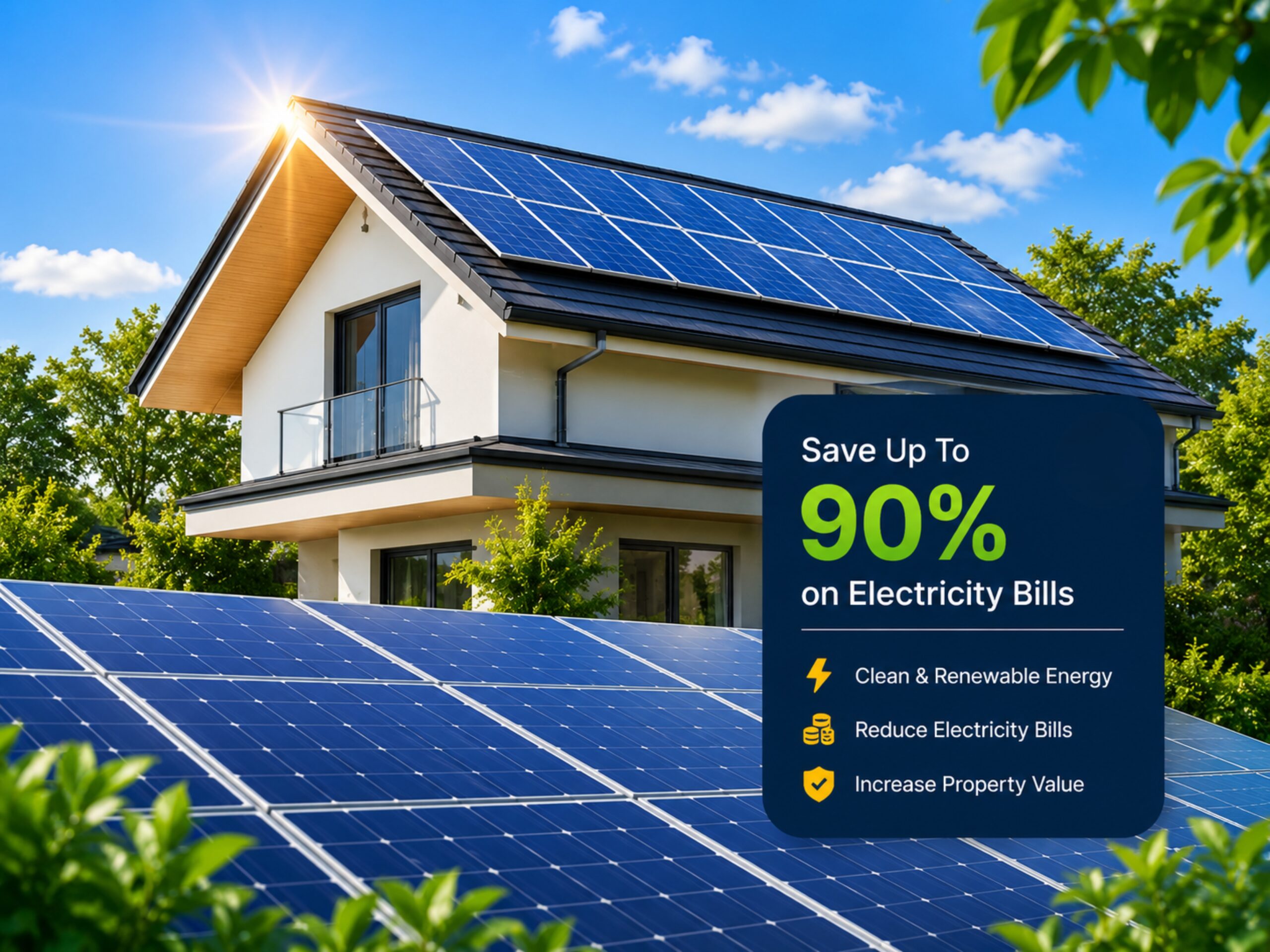
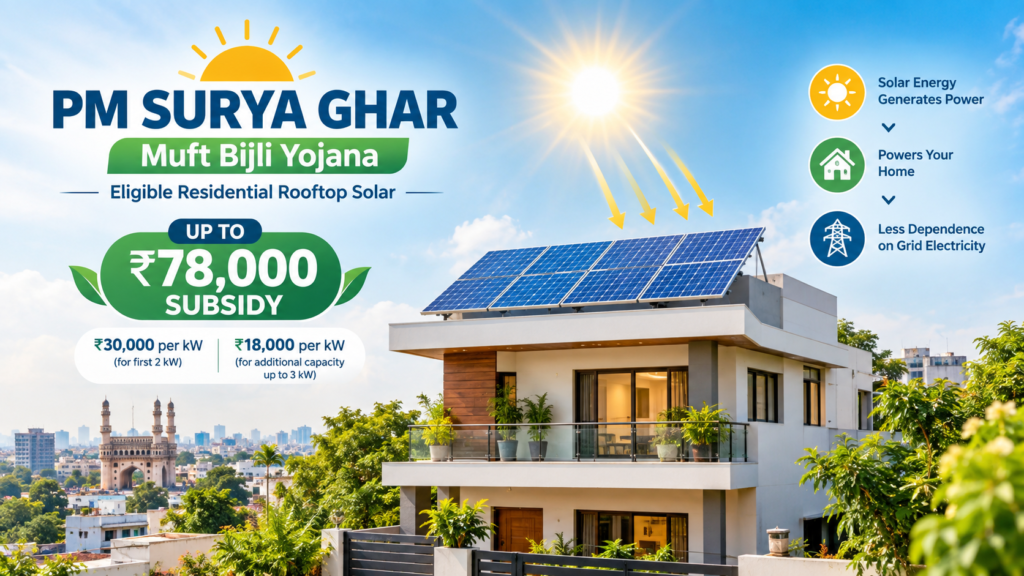
If you are planning to install solar panels for your home, you may be eligible for a solar subsidy in Telangana under the PM Surya Ghar: Muft Bijli Yojana. Eligible residential households can receive government financial support based on the size of their rooftop solar system. The current subsidy structure provides ₹30,000 per kW for the first 2 kW and ₹18,000 per kW for the additional capacity up to 3 kW, with the maximum subsidy capped at ₹78,000 for eligible systems of 3 kW and above. The final subsidy depends on your eligibility, approved process, installation, and verification requirements.
- MNRE approved
- Quality products and warranty
- Expert installation team
- After sales support
How Much Solar Subsidy Is Available in Telangana?
The solar subsidy in Telangana depends mainly on the size of the rooftop solar system installed for your home. Under the current PM Surya Ghar: Muft Bijli Yojana subsidy structure, eligible residential consumers can receive financial support for installing rooftop solar.
Here is a simple breakdown:
| Solar System Size | Subsidy Available |
|---|---|
| Up to 1 kW | ₹30,000 |
| Up to 2 kW | ₹60,000 |
| 3 kW and above | Up to ₹78,000 |
For the first 2 kW, the subsidy is ₹30,000 per kW. For the additional capacity up to 3 kW, the subsidy is ₹18,000 per kW. This means an eligible 3 kW rooftop solar system can receive a maximum subsidy of ₹78,000. Installing a larger system does not increase the residential subsidy beyond this maximum limit under the current structure.
The actual subsidy you receive depends on your eligibility and whether the installation and application follow the required government and DISCOM process.
PM Surya Ghar: Muft Bijli Yojana is a Government of India scheme that supports the installation of rooftop solar systems for eligible residential electricity consumers. The scheme is managed under the Ministry of New and Renewable Energy (MNRE) and is designed to help households generate electricity from solar power and reduce their dependence on grid electricity.
For homeowners looking for a solar subsidy in Telangana, PM Surya Ghar is the main scheme to understand. Eligible residential consumers can apply through the applicable official process, install a qualifying rooftop solar system, and complete the required DISCOM verification and other formalities.
The subsidy is not an automatic payment. The consumer must meet the applicable scheme requirements and follow the approved installation and verification process. Once the required steps are completed successfully, the applicable Central Financial Assistance may be transferred to the consumer according to the current government process.
In simple words, PM Surya Ghar helps eligible homeowners reduce the upfront cost of installing rooftop solar.
⏳ Subsidy scheme period ends 31 March 2027
₹30,000
For 1 kW
₹60,000
For 2 kW
₹78,000
3 kW and above
Who Is Eligible for Solar Subsidy in Telangana?
To receive a solar subsidy in Telangana, you must meet the eligibility requirements of the applicable government rooftop solar scheme. In general, the subsidy is meant for residential consumers who install an eligible rooftop solar system for their home.
You may be eligible if you meet the applicable requirements, such as:
Residential Electricity Consumer
The subsidy is mainly available for eligible households and residential electricity connections. Commercial and industrial consumers generally do not receive the same residential subsidy.
Suitable Rooftop for Solar Installation
Your home should have a suitable roof or an approved location where a rooftop solar system can be installed safely. The required system size may also depend on your electricity consumption and available roof space.
Valid Electricity Connection
You will generally need an active residential electricity connection. The application and technical approval process may involve your local electricity distribution company (DISCOM).
Follow the Official Application Process
To claim the subsidy, you must follow the applicable government process for registration, installation, verification, and other required approvals. Installing solar panels without following the required process may affect your subsidy eligibility.
Complete Installation and Verification Requirements
The rooftop solar system must meet the applicable technical and scheme requirements. After installation, the required inspection, net-metering, verification, and documentation processes must be completed before the subsidy is processed.
Quick Answer: If you are a residential electricity consumer in Telangana and install an eligible rooftop solar system by following the applicable government and DISCOM process, you may qualify for solar subsidy under the current scheme.
How to Apply for Solar Subsidy in Telangana
Applying for a solar subsidy in Telangana involves a few important steps. The process is mainly for eligible residential consumers who want to install a rooftop solar system under the applicable government scheme. Following the correct process is important because installing solar panels first without completing the required approvals may affect your eligibility for subsidy.
Step 1: Check Your Electricity Usage
For example, a home with lower electricity usage may need a smaller system, while a home with higher usage may require a 3 kW or larger solar system.
Not sure how many solar panels you need?
Step 2: Register Through the Official Portal
Step 3: Get Technical Feasibility Approval
Step 4: Choose an Eligible Solar Vendor
Step 5: Install the Rooftop Solar System
Step 6: Complete Inspection and Net Metering
Step 7: Submit Required Documents
Step 8: Subsidy Processing
Documents Required for Solar Subsidy in Telangana
When applying for a solar subsidy in Telangana, you may need to provide certain documents and details during the application, installation, verification, and subsidy process. Keeping these documents ready can help make the process smoother and reduce unnecessary delays.
The exact documents may depend on the current PM Surya Ghar guidelines, your electricity distribution company (DISCOM), and the applicable government process. However, residential consumers may generally be asked for the following:
Electricity Bill
Identity Proof
Consumer and Property Details
Bank Account Details
Technical and Installation Documents
Photographs and Other Required Proof
How to Choose the Right Solar System Size for Your Home in Telangana
Choosing the right solar system size is important when you are planning residential solar in Telangana. Your ideal system depends mainly on your monthly electricity usage, available roof space, budget, and the amount of electricity you want your solar system to generate.
A bigger solar system is not always the best choice. The right size should match your home’s actual electricity needs.
1 kW Solar System
A 1 kW solar system can be suitable for a home with relatively low electricity consumption. It can help reduce your electricity bill while using less rooftop space.
Click Here2 kW Solar System
A 2 kW solar system may be suitable for a home with moderate electricity usage. It can be a good option for households that use common appliances such as fans, lights, a refrigerator, television, and other household equipment.
Click Here3 kW Solar System
A 3 kW solar system is a popular option for many homes with higher electricity consumption. It may be suitable for families using several appliances, including air conditioners, refrigerators, washing machines, televisions, and other electrical equipment.
Click HereSolar System Above 3 kW
Homes with higher electricity consumption may need a system larger than 3 kW. However, choosing a larger system does not automatically mean receiving a higher residential subsidy. The applicable subsidy has a maximum limit under the current structure.
Click HereIs Solar Subsidy Available for Commercial Buildings in Telangana?
One common question is whether businesses, shops, offices, and commercial buildings can get the same solar subsidy in Telangana that is available for homes.
The current PM Surya Ghar: Muft Bijli Yojana residential subsidy is intended for eligible residential electricity consumers. Therefore, a commercial electricity connection should not be assumed to qualify for the same residential Central Financial Assistance.
What About Shops and Offices?
If your property has a commercial electricity connection, the residential PM Surya Ghar subsidy may not apply to your solar installation.
However, installing solar can still be useful for commercial properties because businesses often consume a large amount of electricity during working hours. A properly designed solar system can help reduce the amount of electricity purchased from the grid.
What About Industrial Buildings?
Industrial consumers should also not assume that the residential solar subsidy applies to their project. The available incentives, regulations, electricity tariff, and project requirements can be different for commercial and industrial consumers.
For these projects, it is better to evaluate the solar system based on:
- Monthly electricity consumption
- Electricity tariff
- Available rooftop area
- Solar generation potential
- System capacity
- Net-metering or other applicable regulations
- Project cost and expected savings
Solar Net Metering in Telangana
Net metering is an important part of a grid-connected rooftop solar system. It allows your home to remain connected to the electricity grid while your solar system generates power during the day.
In simple words, your solar panels first produce electricity for your home. If your system produces more electricity than your home is using at that time, the extra electricity can be sent to the grid through the approved connection. When your solar system is not producing enough electricity, such as at night, you can use electricity from the grid.
How Does Net Metering Work?
The process can be understood in four simple steps:
1. Solar panels generate electricity
Your rooftop solar panels generate electricity from sunlight.
2. Your home uses the solar power
The electricity produced is used by appliances in your home.
3. Extra electricity can flow to the grid
When solar generation is higher than your home’s immediate usage, surplus electricity can be exported to the grid, subject to the applicable regulations.
4. The meter records electricity flow
An approved meter records the electricity imported from and exported to the grid according to the applicable net-metering rules.
Why Is Net Metering Important?
For many residential rooftop solar systems in Telangana, grid connection and the applicable net-metering process are important parts of the installation journey.
It can help you make better use of the electricity your solar system generates instead of wasting excess generation.
How to Get Net Metering in Telangana?
The process can involve your local electricity distribution company, or DISCOM. Depending on your location and connection, the applicable DISCOM process must be followed.
You may need to:
- Submit the required rooftop solar application.
- Complete the technical feasibility or approval process.
- Install the approved solar system.
- Complete inspection and verification.
- Complete the applicable meter and grid-connection process.
Telangana’s renewable energy resources provide separate links and information related to rooftop solar and net-meter registration for the state’s DISCOMs.
Does Net Metering Help Reduce Electricity Bills?
It can help reduce the amount of electricity you need to purchase from the grid. However, your actual savings depend on your solar system size, electricity consumption, solar generation, applicable tariff, and the current rules for your connection.
Planning a rooftop solar system for your home?
Choosing the right solar company is important because a rooftop solar system is a long-term investment for your home. The company you choose should help you understand your solar requirement, system size, installation process, subsidy process, and after-sales support before you make a decision.
At Natural Power, we help homeowners understand their residential solar options and choose a system based on their electricity usage and available rooftop space.
Help With Solar System Planning
Every home has different electricity needs. We can help you understand which solar system size may be suitable based on your electricity consumption, roof space, and energy requirements.
Guidance on the Subsidy Process
If you are planning to apply for the solar subsidy in Telangana, understanding the required process is important. Our team can guide you through the relevant steps and documentation required for your rooftop solar project.
Professional Rooftop Solar Installation
A residential solar system needs proper planning and installation. The panels, inverter, mounting structure, wiring, protection equipment, and other components should be selected and installed according to the project’s requirements.
Support After Installation
After completing the required approval steps, choose a solar vendor that meets the applicable scheme requirements. The vendor can help with system design, installation, documentation, and the required technical process.
A Solar Solution Based on Your Home
Instead of recommending the same system to every customer, the right approach is to consider:
Your monthly electricity consumption
Electricity bill
Available rooftop space
Roof condition
Appliance usage
Desired solar capacity
Applicable subsidy
Your budget and long-term savings goals
Ready to Check Your Solar Requirement?
If you are considering residential solar in Telangana, start by checking how much solar power your home may need.
We can help you understand your solar system size, estimated project cost, applicable subsidy, and installation requirements before you make your decision